Get Full Government Meeting Transcripts, Videos, & Alerts Forever!
Get email alerts on the Legislative Roundup topic
No spam. Unsubscribe anytime.
Utah House advances broad slate of bills on education, veterans, nonprofits and elections
Summary
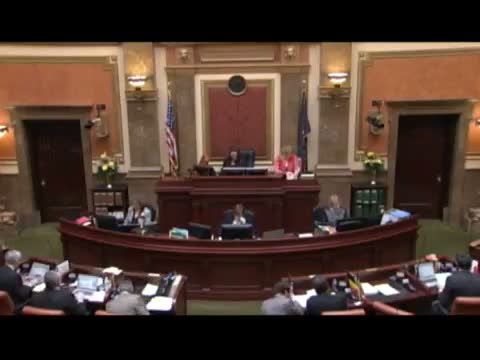
On Feb. 10, 2014, the Utah House approved multiple bills on the third‑reading and consent calendars — including changes to UCAT governance, veteran benefits, disabled parking fines, poll‑worker age, nonprofit audit requirements, charter school enrollments, and several other items — generally by unanimous or large margins.
The Utah House cleared a broad package of bills on Feb. 10, 2014, moving several measures to the Senate and approving multiple third‑reading items on largely bipartisan margins. Sponsors described the measures as technical fixes, procedural clarifications and targeted policy changes affecting education, veterans, nonprofits and election administration.
Key actions at a glance: House Bill 95 (applied‑technology college governance) passed 70‑0 after Representative Ibsen said the bill removes the commissioner of higher education as a voting board member and standardizes school‑board representation at regional campuses. House Bill 219 (veteran separation amendments) passed 71‑0; Representative Peterson said the change would extend benefits to some veterans with a general discharge and “we think this hits about 10 percent of the population that would have a general discharge.” House Bill 264 (disabled parking fine amendments) passed 71‑0; Representative Seelig noted state statute sets a $125 minimum fine and the bill adds flexibility for clerks in cases where a placard was issued but not displayed.
Other notable approvals included House Bill 289 (traffic control signal sensor amendments) — removing a one‑year sunset on an affirmative defense for bicyclists and motorcyclists — which passed 73‑0; First Substitute House Bill 282 (allowing 16‑ and 17‑year‑old poll workers under adult supervision) passed 72‑0 after Representative Powell highlighted student engagement and cited constituent Luke Cyril; and First Substitute House Bill 283 (nonprofit receipt of government money) passed 72‑0, with Representative Menlove noting a $500,000 audit threshold for state funds.
House Bill 36 (charter school enrollment amendments) passed 71‑2; Representative Lifferth said the bill adds ‘grandparent’ to the list of relatives who may enroll without a lottery in cases where a grandparent helped found the charter school and clarifies the definition of 'disadvantaged student' for weighted lotteries. House Bill 29 (county recorder index amendments) passed 70‑2 to require county recorders to keep an index of water‑rights transfers, per a task‑force recommendation.
A number of bills were circled (set aside for amendment) for further work, committee reports were adopted, and multiple communications from the Senate were entered into the record. The House adjourned to meet again on Feb. 11 at 10:00 a.m.
Votes at a glance (selected, as recorded in the House transcript): HB95 70‑0; HB219 71‑0; HB264 71‑0; HB289 73‑0; HB274 73‑0; FS HB282 72‑0; FS HB283 72‑0; HB29 70‑2; HB36 71‑2; HB60 70‑0. For full roll calls and bill texts, see official legislative records.