Get Full Government Meeting Transcripts, Videos, & Alerts Forever!
Get email alerts on the Nonconsensual Liens topic
No spam. Unsubscribe anytime.
Utah House passes bill requiring judicial validation of nonconsensual common‑law liens
Summary
The House passed House Bill 16 after amendment, creating a new category for nonconsensual common‑law liens and requiring filers to seek judicial validation before such liens are effective; sponsor said filers — not homeowners — would bear validation costs. Vote: 61‑11.
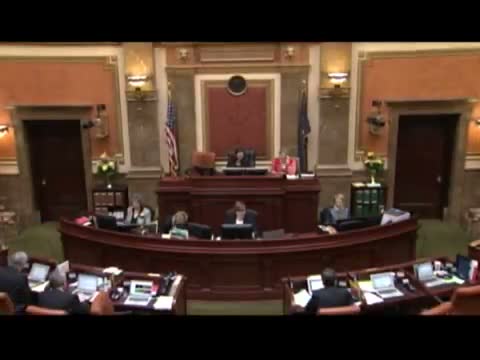
House Bill 16, sponsored by Representative Webb, passed the Utah House 61‑11 on Feb. 10, 2014, after the adoption of an amendment broadening the bill’s definition to include the Board of Pardons and Parole. The measure creates a separate category for what the sponsor called “nonconsensual common law liens” and provides that those liens are not valid when recorded unless and until the filer obtains judicial validation.
The bill’s sponsor described the problem as liens filed primarily against public officials that “lock up” property titles and noted a recent surge in filings. Representative Webb said the statute would change the burden of proof: “When the burden falls on the owner of the property to clear their own title, we need to talk about what that costs,” and he cited an estimate that about 200 of these liens had been filed recently, producing roughly $200,000 in potential quiet‑title costs. At one point he described the filings as “malicious, dangerous liens that affect your property, my property, and all of Utah’s property.”
Opponents questioned the bill’s approach. Representative Tanner said, “This bill is wrong headed,” arguing that the bill risks carving out a special class of protected people and may leave many real‑estate transactions in limbo because title companies and lenders could refuse to insure until the filer pursues court validation. Representative McKay also warned that presuming such liens invalid in the interim could overstate the prevalence of wrongful filings and have chilling effects on the market.
The House debated operational questions about interim status and legal costs. Representative Perry asked, “Who pays for their attorney?” and the sponsor replied the bill shifts those costs to the filer: “The filer or the sponsor of the lien would pay.” The sponsor and supporters argued that quiet‑title and existing wrongful‑means remedies remain available and that the bill targets filings without a legal basis; supporters also cited instances of violence and threats associated with sovereign‑citizen actors in other jurisdictions to underline the public‑safety and property‑protection rationale.
An amendment (Amendment No. 2) was approved to ensure certain entities were included in the bill’s definition, and the House voted to pass the bill as amended. The bill will be transmitted to the Senate for consideration.
What happens next: HB16 moves to the Utah Senate; the transcript record shows the House vote and the adopted amendment but does not record any Senate action or effective date.