Get Full Government Meeting Transcripts, Videos, & Alerts Forever!
Get email alerts on the Public Safety topic
No spam. Unsubscribe anytime.
Utah House advances two weapons-law bills after amendments and clarifications
Summary
Lawmakers amended and passed House Bills 295 and 296 to clarify weapons-law exemptions and concealed-permit training requirements for certain officials; sponsors said changes reflected discussions with associations and rulemakers.
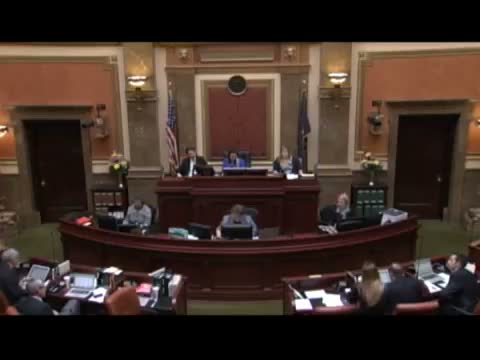
The Utah House on Feb. 12 approved two bills that modify exemptions and requirements in state weapons law.
Representative Greenwood, sponsor of both measures, said HB 295 addresses exemptions in the criminal code affecting groups of people and that amendment number 2 was developed in consultation with associations and "gun lobbyists" to clarify language and make the bill better. He described the bill as adjusting which groups are exempt under sections of the criminal code, and the floor accepted the amendment; the House later recorded the vote and announced HB 295 had passed 69–0.
On HB 296, Greenwood explained the bill clarifies concealed-weapon permit exemptions and training requirements for a defined group of officials (including the Board of Pardons, judges, district attorneys, county attorneys, the attorney general, and city attorneys). He said the Commissioner of Public Safety will set ongoing training requirements and that BCI (Bureau of Criminal Identification) will have procedures to revoke certification when appropriate. The House passed HB 296 by voice vote with an announced tally of 70–0.
Supporters framed both bills as technical clarifications to ensure public-safety and parity; questions from the floor about how nonresident travelers and BCI revocation would be handled were answered by the sponsor by pointing to relocated or clarified statutory language in the bills. Both measures will be transmitted to the Senate.