Get Full Government Meeting Transcripts, Videos, & Alerts Forever!
Get email alerts on the SB10 401k Match topic
No spam. Unsubscribe anytime.
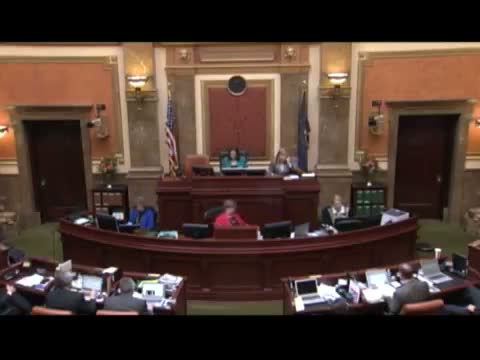
House passes SB10 to set $26 state 401(k) match; vote 72-0
Summary
The Utah House approved Senate Bill 10, which sets the maximum state 401(k) match at $26 per pay period and reallocates appropriations to agency budgets to process the new benefit; the bill passed the House 72-0.
The Utah House voted unanimously to pass Senate Bill 10, the 401(k) appropriation amendments that set the state match for the newly created optional benefit at a maximum of $26 per pay period.
Why it matters: The amount establishes funding authority so the Division of Finance can process the first employer match payments that follow a benefit change enacted last session (House Bill 194). Representative Mel Brown, the House sponsor, told members that agencies must be allocated the restricted funds so they can draw the money from each agency’s budget to pay the match.
Sponsor’s summary: Representative Mel Brown said the bill ‘‘sets the maximum 401ks rate match rate at $26 a pay period.’’ He told the House that the bill reallocates previously set-aside general-fund amounts to the agencies that will actually pay the benefit and adds a restricted-fund appropriation, with details in the fiscal note.
Questions on Roth treatment: Representative Cunningham asked whether employees contributing to a Roth 401(k) would be eligible for the match. Representative Brown and the chamber’s fiscal analyst said they could not immediately confirm the Roth question and agreed to get clarification from the fiscal analyst’s office. Brown said the bill as drafted referred to a tax-deferred option administered through the Utah Retirement Systems and advised members that, on that basis, the match was intended for tax-deferred contributions rather than Roth after-tax contributions.
Fiscal and uptake context: The majority leader (unnamed in the transcript) and Brown noted a roughly 55 percent take-up rate so far for the new option and estimated the $26-per-pay-period match equates to about $1,300 a year when fully matched across pay periods for a participating employee. Brown characterized the change as substituting a fixed-cost benefit for a previous open-ended post-employment health benefit.
Vote and next steps: The Speaker announced the vote tally: 72 yes, 0 no. The bill passed and will be signed by the Speaker and returned to the Senate for the President’s signature.
Other business: The House also read several first-reading House bills and handled scheduling announcements before adjourning.