Get Full Government Meeting Transcripts, Videos, & Alerts Forever!
Get email alerts on the Education History Day topic
No spam. Unsubscribe anytime.
House passes bill to preserve Utah History Day program with $75,000 fiscal note
Summary
The House passed First Substitute HB64 to transfer administration of Utah History Day to the Division of State History and provide about $75,000 for a half-time staff position to run the program statewide; lawmakers described strong student and family support during committee testimony.
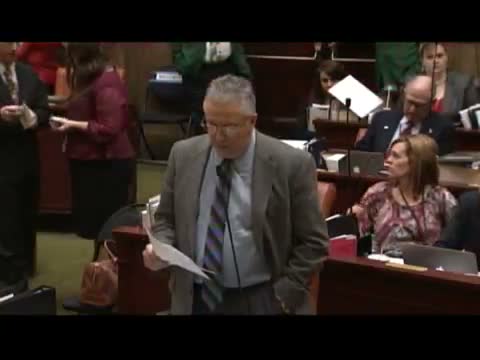
The Utah House on Feb. 5 passed First Substitute House Bill 64, a measure to continue Utah History Day and designate the Division of State History to coordinate the program statewide. Representative Draxler, the sponsor, told the House the division’s fiscal estimate came to $73,965 and the fiscal analyst rounded that to a $75,000 fiscal note to fund a half‑time position to administer the program.
"This would allow for one half of an FTE to help administer this program statewide," Draxler said, urging support after several students, parents and teachers testified in committee. He described the program as similar to a science fair where students in grades 4–12 research and present historical projects in formats ranging from papers to documentaries.
Several colleagues spoke in favor. Representative Noelle said committee response and follow-up conversations showed the program ‘‘does a lot of good’’ for students’ critical thinking and research skills. Representative Sealy and Representative Layton spoke of personal experience: Sealy recounted participating in a similar program as a teenager; Layton described his daughters’ involvement and the program’s value in teaching teamwork and research.
Draxler said the bill designates the first Friday after the fourth Monday in January as Utah History Day at the Capitol, ensuring an annual showcase at the session for student projects. The House voted 66–6 to pass HB64 and transmit it to the Senate for consideration.
The bill’s fiscal note identifies a $75,000 allocation and the sponsor said the Division of State History had produced a detailed estimate. If enacted, the program would be supported by a 0.5 full‑time equivalent position assisted by volunteers statewide; the bill does not specify additional long‑term funding sources beyond the fiscal note presented.
The measure now moves to the Senate for consideration.