Get Full Government Meeting Transcripts, Videos, & Alerts Forever!
Get email alerts on the Energy Infrastructure topic
No spam. Unsubscribe anytime.
House approves Interlocal Cooperation Act change to let Intermountain Power Project sign contracts beyond 50 years
Summary
The House passed House Bill 27 to exempt certain interlocal energy entities and Intermountain Power Project contracts from a statutory 50‑year limitation, a change sponsors said is needed for long-term contracts that may run into 2077; the bill passed the House 72‑2 and will be transmitted to the Senate.
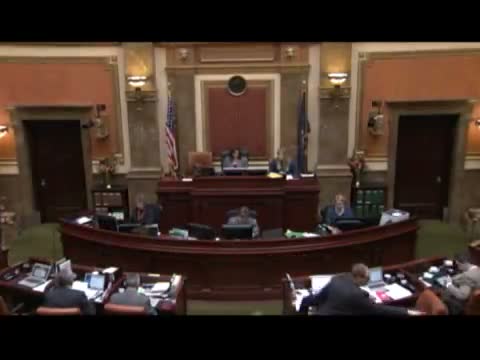
The Utah House on Jan. 29 approved House Bill 27, which amends the Interlocal Cooperation Act to exempt certain interlocal energy entities — such as municipal power associations and the Intermountain Power Project (IPP) — from a statutory 50‑year contracting limitation.
Representative Barris introduced the bill, explaining that IPP is renegotiating long‑term contracts that extend between 2027 and 2077 and that the current statutory 50‑year limitation could raise legal questions about those agreements. "We're just going to clarify that in statute and say that these interlocal entities ... are no longer required to conform to that 50 year window," Barris said (SEG 656–667).
Representative Nelson, speaking in support, said the IPP facility is in his district and called the change essential to maintaining the project's economic viability and supporting local jobs and municipal electricity users (SEG 681–691).
After debate was waived, the House voted; the clerk announced House Bill 27 received 72 yes votes and 2 no votes and will be transmitted to the Senate for consideration.
Proponents said the statutory change was requested by the affected municipal and interlocal entities to allow repowering and long‑term contracting flexibility. Critics on the floor asked why the 50‑year limit was originally adopted, and sponsors said the change reflected agreement among stakeholders as the simplest path forward.
With the House vote recorded, HB 27 advances to the Senate where legislators said it will be considered in turn.