Get Full Government Meeting Transcripts, Videos, & Alerts Forever!
Get email alerts on the Legislative Votes topic
No spam. Unsubscribe anytime.
House approves broad slate of Senate bills on consent and third reading; highlights include SB 171, SB 212, SB 271 and others
Summary
In a busy morning session March 11, 2015, the Utah House cleared many consent and third‑reading Senate bills—from technical updates on registered agents (SB 174) to policy changes on surplus property (SB 122), metal recycling (SB 171), insurance and health protections (SB 212, SB 271) and data‑security coordination (SB 255). Several bills were circled for later review.
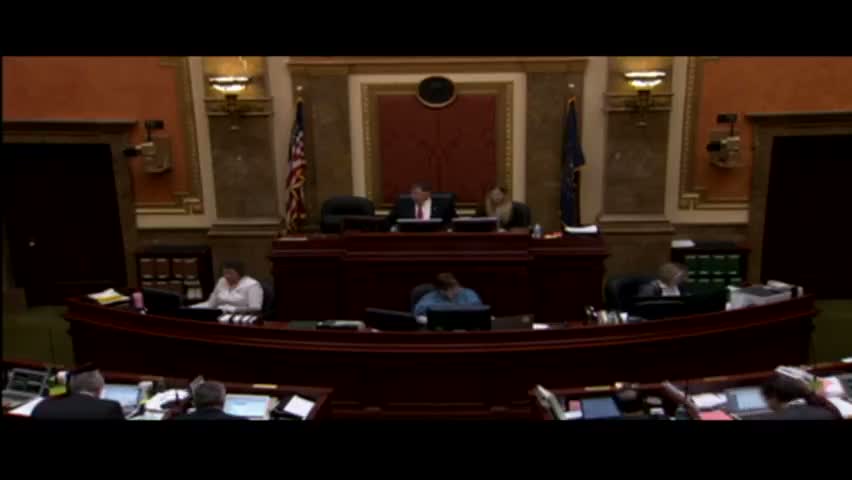
The Utah House moved a large group of Senate bills through final or concurrence votes during its March 11, 2015 morning floor session, approving a mix of technical fixes, policy updates and consumer‑protection measures.
On the consent calendar, the House passed SB 174 (registered agent requirements for assumed‑name entities) by voice with a reported 65–0 tally and SJR 14, urging Congress to address a GI Bill gap for the Utah National Guard, passed 62–2. House sponsors explained the intent of each measure briefly before the chamber approved them for transmittal to the Senate.
Among bills with more substantive floor discussion, Representative Perry presented SB 171 (metal recycling amendments) to eliminate a requirement that recyclers remove oil filters from engine blocks before crushing. Sponsors and supporters argued the change reduces safety risks and costs because vehicles are already drained; opponents asked questions about remaining oil in pans and the relative environmental impact. The bill passed as amended and will be returned to the Senate.
Representative Dunnegan moved to uncircle SB 212 (surplus lines insurance modifications), explaining it would repeal sections that impeded insurers' ability to operate after last year’s HB 129; SB 212 passed (65–1). Dunnegan also brought SB 271 (health benefit plan amendments) back for consideration, explaining it prevents insurers from changing clinical benefits unilaterally after a terminal illness diagnosis; SB 271 passed (63–0).
Other notable actions: first substitute SB 122 (state surplus property management) passed unanimously; first substitute SB 193 (local government amendments requiring clearer itemization of special district fees) passed 67–0; first substitute SB 255 (data security management council) passed 78–0, establishing a coordinating council for state and local cybersecurity efforts.
Several bills were circled—set aside for further work or amendment—most prominently third substitute SB 137 (campaign and financial reporting requirements) and the third substitute SB 216 (high‑cost infrastructure tax credits), which the House substituted and circled while members reviewed proposed additions that would expand eligibility to certain refinery upgrades. The House lifted a batch of items from rules to the top of the third‑reading calendar under suspension of the rules by constitutional two‑thirds when requested.
The morning’s business concluded with multiple bills sent back to the Senate for signature or further consideration and the House recessed until 2:00 p.m.