Get Full Government Meeting Transcripts, Videos, & Alerts Forever!
Get email alerts on the Transportation Natural Gas topic
No spam. Unsubscribe anytime.
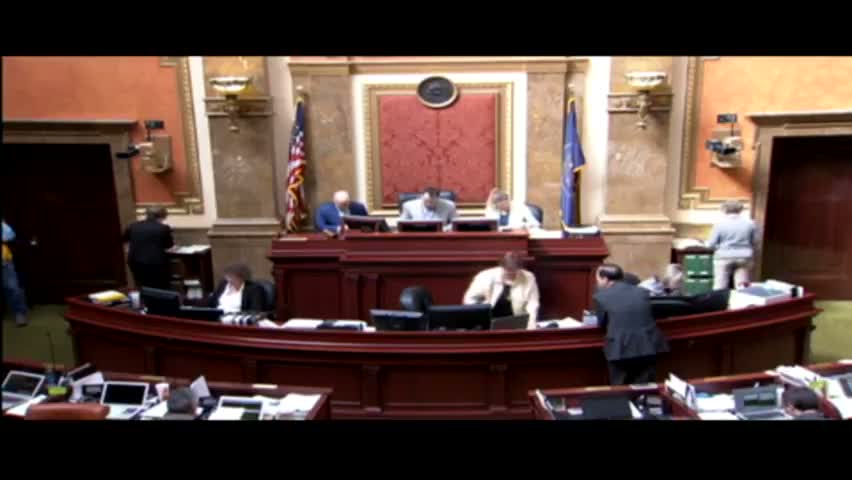
House narrowly approves natural‑gas vehicle incentives and phased CNG tax increase, 39–36
Summary
On March 9, 2015, the Utah House approved first substitute HB 406, a set of incentives and a phased tax‑rate change aimed at encouraging purchase of factory‑built natural‑gas heavy trucks. Debate focused on air‑quality benefits, which fleets qualify, and fiscal impacts; the bill passed 39–36.
SALT LAKE CITY — The Utah House of Representatives narrowly approved first substitute House Bill 406 on March 9, 2015, approving a package of tax credits and a multi‑year phase‑in of compressed natural gas (CNG) fuel taxation intended to encourage purchase of factory‑installed natural‑gas heavy vehicles. The final floor vote was 39 yes, 36 no.
Representative Handy, the bill sponsor, said the measure aims chiefly at air quality and to help small local fleets replace older, high‑emission trucks. "It's a clean air issue," he told colleagues as he outlined a schedule of tax adjustments and a tax‑credit program that the floor text caps at $2 million per year and reserves 25 percent of credits for small fleets.
The bill limits vehicle eligibility to new original‑equipment purchases (heavy duty trucks that have never been titled or registered and have been driven fewer than 7,500 miles), and establishes a decreasing schedule of credits for fleets; the sponsor described the $25,000 top credit as a response to the high cost of heavy trucks and said credits will decline over time.
Opponents questioned the bill's design and who benefits. Representative Ipsen asked whether the program requires trading in older, polluting vehicles to obtain credits — a concern tied to whether the policy would reduce overall emissions. "Does 1 have to trade a non compliant truck in on it so that we're eliminating that polluting situation with that vehicle?" Ipsen asked. Handy answered that the program does not require trade‑ins and that the credits apply to new original equipment purchases.
Representative Red pressed on vehicle eligibility and confirmed the bill, as drafted, targets essentially new factory‑built natural‑gas trucks rather than conversions of older diesel rigs. Representative Draxler asked about fiscal impacts on the state's education fund; Handy said the bill's fiscal effects that reduce education fund revenue would be backfilled from the general fund as reflected in the fiscal note.
Supporters argued the targeted incentives would produce disproportionate air‑quality gains because medium and heavy‑duty local fleets (for example, garbage and municipal trucks) account for a large share of emissions relative to their numbers. "These offer a tremendous return on investment when running on natural gas because they pollute far less," Representative Draxler said.
Opponents, including Representative Ipsen and others in the trucking industry, said newer diesel trucks and recent fuel standards narrow the air‑quality gap and raised operational concerns such as fueling time and suitability for long‑haul carriers. Representative Ipsen warned extended fueling times for CNG could reduce driver productivity, saying the added fueling time "almost will lose a day's productivity in a week's time."
After extended debate, the House substituted, amended and ultimately passed the bill on a close vote. The bill will proceed to the Senate for consideration.
Votes and next steps: the House passed first substitute HB 406, as amended, 39–36. The sponsor said the Legislature will study the program's impact over the interim.