House approves tax-credit package to lure industry to rural Utah, adds air-quality incentive
Loading...
Summary
The House passed third-substitute SB216, a program to provide post-performance tax credits (negotiable, up to 30%) to offset high infrastructure costs for businesses moving to rural Utah and to accelerate adoption of Tier 3 fuel standards; the bill passed 68-4 and will return to the Senate.
The Utah House of Representatives on March 11 approved third substitute SB216, a bill creating High Cost Infrastructure Tax Credits intended to entice businesses to locate where utility and transportation infrastructure is costly or absent and to reward faster adoption of Tier 3 fuel standards by refineries.
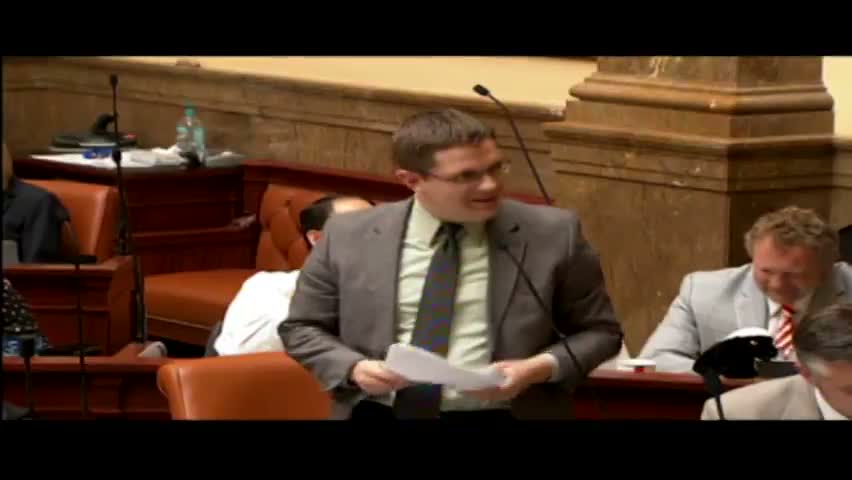
Representative Fred Cox, sponsor of the substitute, told the chamber the program would function as a post-performance, refundable-like credit negotiated with the governor’s office and could be applied where new or expanded facilities would create jobs and pay new tax revenue. “This program would also add an incentive for refineries to move to Tier 3 fuel standards,” Cox said, arguing the change could be “a game changer for rural Utah.”
Why it matters: sponsors framed the measure as a tool to spread economic development beyond the Wasatch Front, urging the state to help rural counties overcome high upfront infrastructure costs. Cox also tied the measure to air-quality goals, saying adoption of Tier 3 fuel could immediately reduce vehicle emissions.
Supporters said the program is limited and subject to review. Representative Cox said the bill requires interim review by the Public Utilities and Revenue & Taxation committees and that the credit would often be less than the statutory 30% cap. Representative Nelson said the credits are “post performance incentives that will be paid back to the state” and would allow rural areas such as Tooele, Juab and Millard to attract investment.
Opponents pressed fiscal concerns. Representative McKay, chair of the Revenue and Taxation Committee, warned that tax-credit programs affect the state’s revenue base and that a bill with a tax-policy effect of this scale typically merits fuller review in the tax committee. On the bill’s fiscal note, the sponsor acknowledged the official score states “0” for baseline impact but cited language estimating the program could cost “up to $8,000,000 a year” under certain uptake scenarios.
Representative Cox invoked air-quality data in closing, saying, according to ‘‘clean air folks,’’ ‘‘simply by adopting Tier 3 fuel would reduce emissions by vehicles by 10%, tomorrow.’’
The House approved the bill 68-4; the bill will be returned to the Senate for further consideration.
Next steps: the measure is subject to the implementation and review requirements in the bill and the interim committee reviews mandated in statute.