Get Full Government Meeting Transcripts, Videos, & Alerts Forever!
Get email alerts on the Cow Share Program topic
No spam. Unsubscribe anytime.
House approves limited cow‑share law, requiring notification and caps on program size
Summary
Second substitute H.B. 104 passed 61‑11 after extended floor debate. The measure legalizes limited cow‑share raw‑milk arrangements with notification to UDAF, documentation requirements and caps (compromise limited many programs to two cows) intended to keep arrangements small and address outbreak response.
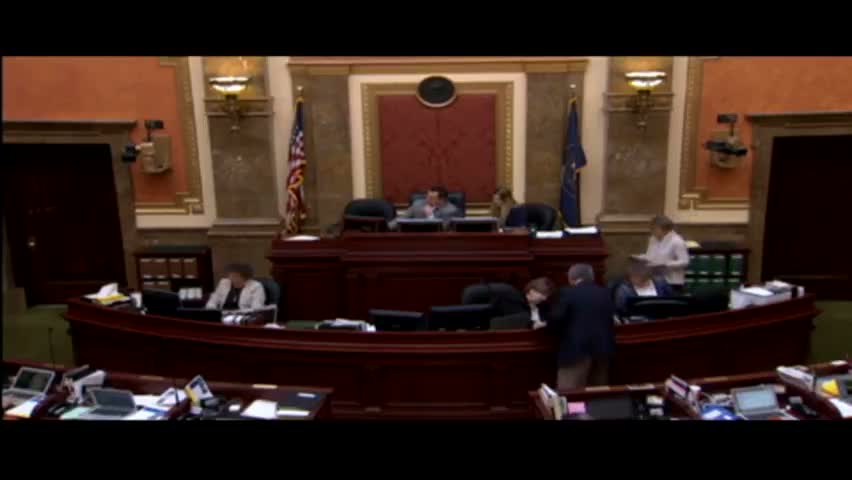
The Utah House passed second substitute H.B. 104 on March 5, 2015, authorizing and regulating limited cow‑share raw‑milk arrangements with notification to the Utah Department of Agriculture and Food (UDAF), documentation requirements and program size limits. The substitute passed 61‑11 and will move to the Senate.
Representative Roberts, sponsor of the bill, described the policy as a compromise between self‑reliant residents who want limited access to raw milk through shared ownership of animals and public‑health and dairy industry concerns. The final substitute set modest size limits (the floor compromise capped informal cow‑share programs at two cows in many cases plus small ruminant limits), required boarding and bill‑of‑sale documentation to be kept by the operator, and mandated notification to UDAF so health investigators can locate participants promptly in the event of an outbreak.
Opponents including representatives citing the Utah Dairy Commission and Farm Bureau said they did not support the final draft, arguing the bill was not fully fixed and would benefit from interim work. Public‑health advocates noted the bill decriminalizes existing arrangements and could improve outbreak investigations by removing incentives for participants to conceal raw‑milk use.
Supporters characterized the law as a careful balance to allow small, familial sharing while protecting public health through notification and limits intended to prevent commercial distribution. After extended floor discussion and several members’ requests for interim refinement, the House passed the second substitute 61‑11; the measure will be transmitted to the Senate.