Get Full Government Meeting Transcripts, Videos, & Alerts Forever!
Get email alerts on the Education Elections topic
No spam. Unsubscribe anytime.
House rejects substitute to change selection of state school board members after extended floor debate
Summary
After an hour-long debate over partisan versus nonpartisan options for the State Board of Education, the House defeated the fifth substitute of SB 104 on a 31–43 vote. Proponents argued voters need clarity about candidates; opponents warned the change would invite partisan litmus tests into education.
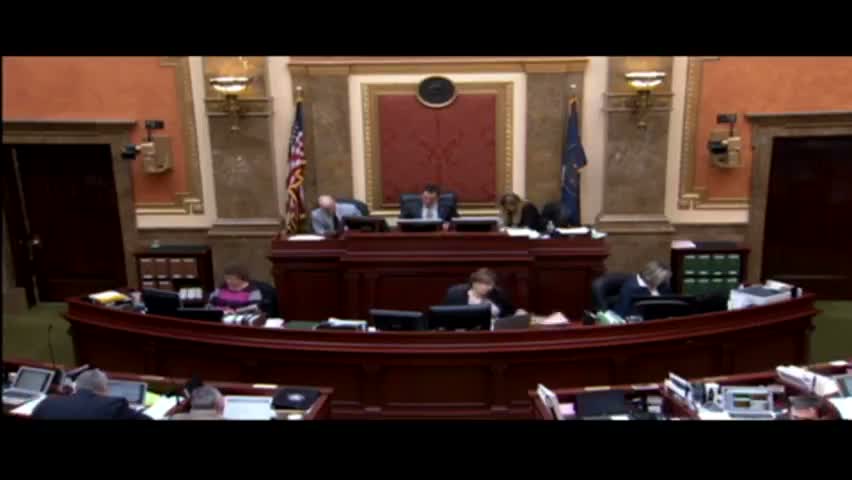
Fifth substitute Senate Bill 104, a proposal to change how members of the State Board of Education are selected, failed on the Utah House floor after extended debate and a recorded vote of 31 yes and 43 no.
Representative Stratton, who moved to uncircle the bill, framed the measure as addressing a statewide governance problem and stressed the stakes: “we spend almost 60% of our state budget on education,” and the State Board oversees more than 600,000 students. Stratton said the substitute focuses on state-board—not local—elections and argued the public deserves clearer vetting of candidates.
Representatives debating the bill split along procedural and philosophical lines. Representative Anderegg said a federal judge had declared the existing method unconstitutional and described outreach to principals and teachers who, he said, preferred clear candidate positions over party labels. He told colleagues that alternatives were necessary because “Judge Waddup says we gotta do something.”
Opponents including Representative Moss and Representative Ward warned that moving to partisan contests would inject party politics into questions about education policy. Moss said party affiliation “will get into party politics and issues that aren't related to education,” and urged maintaining nonpartisan selection to keep board members answerable to constituents rather than to party bosses. Representative Brown acknowledged the process has changed repeatedly and said he supports trying new approaches but emphasized concern about process integrity.
Supporters argued the change would increase transparency about candidates’ positions on testing, Common Core and other policy matters. Opponents argued local districts have functioning nonpartisan elections and that party-affiliated contests would create litmus tests that could harm students’ interests.
After debate closed and the previous-question motion carried, the House voted and the bill failed. The clerk recorded the bill as referred to staff for filing. There was no unanimous consent or subsequent motion to reconsider recorded before adjournment.
What happens next: With the fifth substitute defeated on the floor, the underlying policy options (partisan elections, nonpartisan elections, gubernatorial appointment) remain unresolved in this session; proponents and opponents indicated they will continue outreach and constituent work on alternatives.