Get Full Government Meeting Transcripts, Videos, & Alerts Forever!
Get email alerts on the Public Health topic
No spam. Unsubscribe anytime.
House backs state Alzheimer—s plan directing Department of Health to track and plan for dementia
Summary
HB 175 designates Alzheimer—s and related dementias as a public health issue and directs the Department of Health to develop a state plan; the House passed the bill 63-10, citing a fiscal note of about $160,000 and need for budget prioritization.
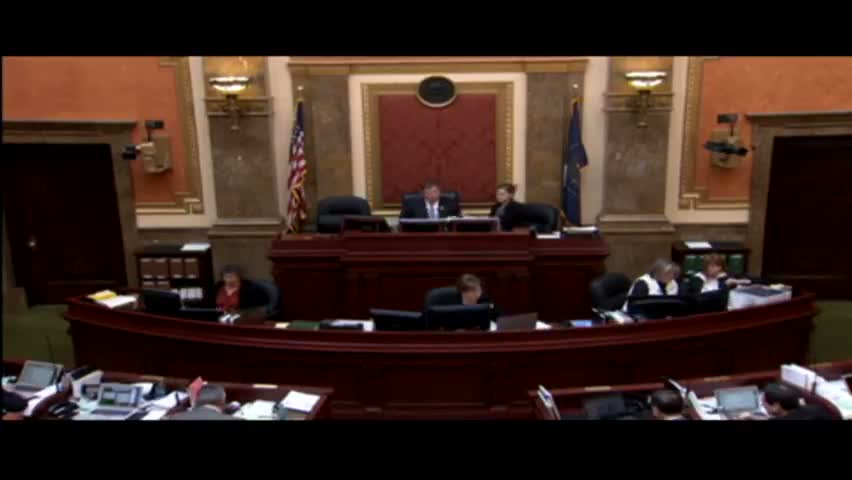
The Utah House passed HB 175 on Feb. 23, a bill that designates Alzheimer—s disease and related dementias as a public health issue and directs state agencies to develop a strategic plan to track prevalence and plan responses.
Representative Ray, sponsor, said the legislation is intended to prepare state health and social services systems for an anticipated increase in dementia cases as baby boomers age. "The purpose of this bill is Alzheimer's is one of our up and coming potential epidemics for the state of Utah," Ray said on the floor.
Ray said the first step is tracking cases through the Department of Health, followed by a multi-part strategic plan to improve physician reporting, caregiver support and public awareness. He cited a fiscal note of roughly $160,000 and emphasized that passage does not guarantee immediate funding beyond budget committee prioritization.
Representative Kristofferson asked whether existing medical tracking covers the need; Ray said the Department of Health will house the tracking and that the bill provides staffing, a website and related mechanisms as part of the fiscal note. The bill passed on a recorded roll call, 63-10, and now goes to the Senate.
Supporters characterized HB 175 as a groundwork measure that will give state planners data to estimate social-service needs and inform future budget decisions; opponents raised concerns about ongoing funding and prioritization in the appropriations process.