Get Full Government Meeting Transcripts, Videos, & Alerts Forever!
Get email alerts on the Environmental Regulation topic
No spam. Unsubscribe anytime.
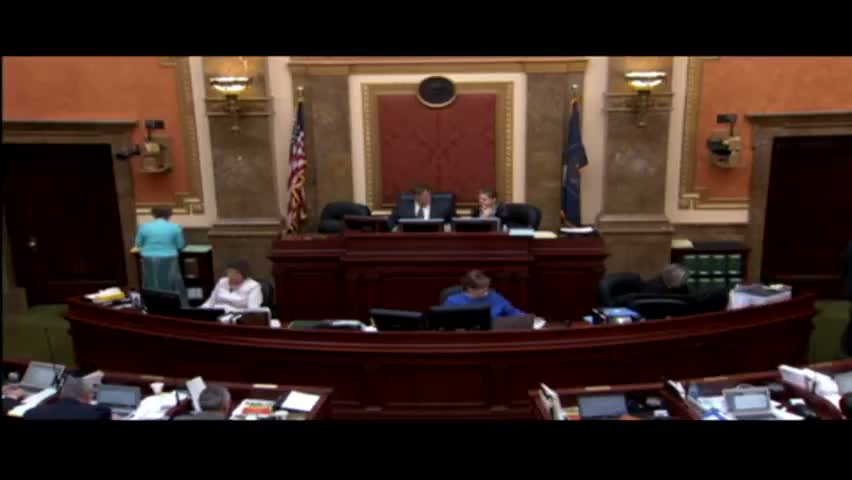
House passes HB 226 to let Utah tailor air-quality rules to state conditions after floor debate
Summary
The Utah House passed HB 226, allowing the Division of Air Quality greater flexibility to adopt state-specific rules tailored to Utah’s geography and seasonal inversions while preserving public hearings and administrative review; the bill passed 58–14 and will be sent to the Senate.
SALT LAKE CITY — After extended floor debate, the Utah House on Feb. 24 approved House Bill 226, a measure that lets the Division of Air Quality adopt state-specific rules to help the state meet federal Environmental Protection Agency standards while preserving processes for public comment and administrative review.
Representative Edwards, the bill sponsor, argued the change gives Utah experts flexibility to design ‘‘plays’’ appropriate for local conditions rather than forcing a one-size-fits-all federal approach. “If the EPA standards are like the goalposts … the rules are like our playbook,” he said, explaining that rules tailored to Utah could better address seasonal inversions and other local conditions.
Opponents and questioners pressed the sponsor on whether the substitute language — which replaces phrases such as "more stringent" with "different" — meaningfully changes legal authority or simply rephrases existing constraints. Representative Green asked whether the change was “a matter of form over substance,” and Edwards replied that Utah remains bound by federal standards and cannot adopt regulations less stringent than the EPA; the bill addresses rulemaking flexibility rather than changing national standards.
Representative Ivory and others raised concerns about removing language (lines 40–46) that requires written findings showing federal measures are inadequate. Edwards said attorneys for both industry and DAQ recommended the compromise language to avoid imposing a burdensome, costly showing that could deter DAQ from pursuing Utah-specific solutions; he cited recent ozone discussions as an example where the prior language encouraged statewide measures rather than targeted regional rules.
Supporters said the bill is a compromise that maintains public hearings and the administrative rules review committee as checks on agency action. After a successful motion to end debate, the House voted to pass HB 226, 58–14. The bill will be referred to the Senate for further consideration.
Proponents say HB 226 will allow more targeted, evidence-based rules for different parts of Utah while opponents urged care to preserve legislative oversight and prevent unintended authority expansions.