Get Full Government Meeting Transcripts, Videos, & Alerts Forever!
Get email alerts on the Education Budget topic
No spam. Unsubscribe anytime.
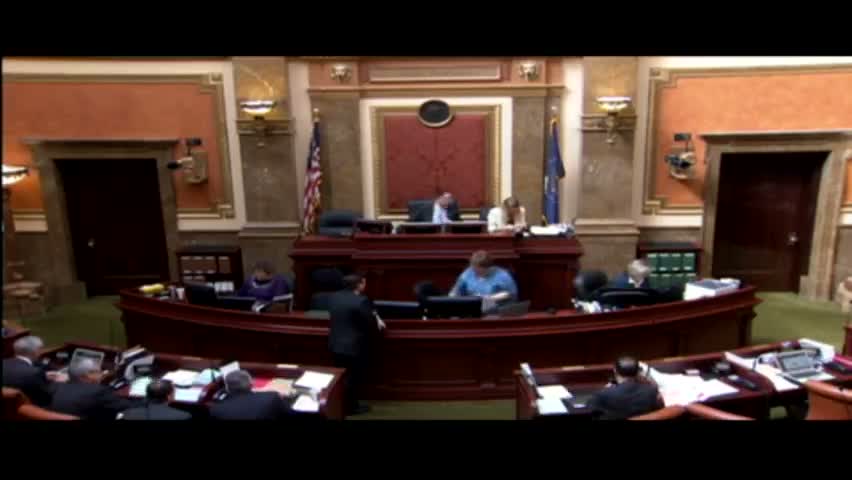
House approves public education base-budget amendments after heated floor debate
Summary
The House on Feb. 10 passed first substitute Senate Bill 1, a base-budget adjustment for public education that identified about $63 million in potential cuts and preserves an allocation for expected enrollment growth; the bill passed 56–17 after members raised concerns about charter funding and cuts to specific programs.
The Utah House of Representatives on Feb. 10 passed first substitute Senate Bill 1, the public education base-budget amendments, by a recorded vote of 56 yes to 17 no. The measure, designed as a ‘stress test’ of the K–12 base budget, identifies about $63 million in potential reductions while the committee separately moved to fund student enrollment growth in a later final appropriation.
The bill’s House sponsor summarized the committee’s work, saying the subcommittee reviewed roughly $3.9 billion in state-appropriated public-education funding and recommended about $63 million in reductions—roughly 2 percent—and that the committee also unanimously endorsed a motion to fully fund projected enrollment growth. “We recommended, approximately, dollars 63,000,000 of cuts, just slightly over 2%,” the sponsor said in floor remarks.
Why it matters: The package is the base on which the final education appropriation will be built. Lawmakers said the preliminary cuts create flexibility and allow the Legislature to identify items for restoration or reallocation before the final budget is adopted.
Members who opposed the measure said the public misreads the exercise and that the decision-making here still carries real consequences. Representative Moss said the public “is shocked, horrified” by reported cuts and said she would vote no because of concern about the cumulative effect of prior reductions and the risk to students and programs.
Several members pressed the sponsor on policy questions tied to budget choices. Representative Paulson said shifting responsibility for charter-school replacement funding toward districts represents “a major shift in policy” that should be addressed through legislation rather than hidden in the budget. Representative Briscoe outlined line-item reductions she said were most troubling—including cuts to concurrent-enrollment funding, K–3 reading programs, school transportation, and math-and-science supports—and warned that some classroom programs could be lost if allocations are not restored.
The sponsor responded that the committee had added intent language to guide how new money is prioritized and that the $63 million identified for possible reductions is intended to be largely restored or reallocated in the final appropriation. The sponsor warned that a no vote on the base could jeopardize education funding continuity and urged support. As the sponsor put it on the floor, “a no vote puts our entire public education budget in jeopardy.”
The House vote: First substitute Senate Bill 1 passed 56–17 and will be signed by the Speaker and transmitted to the Senate for its concurrence. The record shows the measure will be the baseline for continued negotiations and final budget decisions.
What’s next: Lawmakers said they expect additional deliberations and adjustments in the final education appropriation bill later in the session. Committees signaled intent to restore or reallocate many items after further review.
Sources and attribution: Quotations and attributions are drawn from the House floor transcript and are attributed to speakers as recorded on Feb. 10, 2015. The bill was introduced on the House third-reading calendar and described by the House sponsor during the floor presentation.