Get Full Government Meeting Transcripts, Videos, & Alerts Forever!
Get email alerts on the Family Law topic
No spam. Unsubscribe anytime.
House approves interstate putative‑father registry compact after floor debate
Summary
The Utah House passed first substitute Senate Bill 10, creating a voluntary interstate compact to share putative‑father registry information, 52–18. Supporters said it improves notice to potential fathers before adoptions; opponents said Utah law already protects unwed fathers and the compact creates unnecessary bureaucracy.
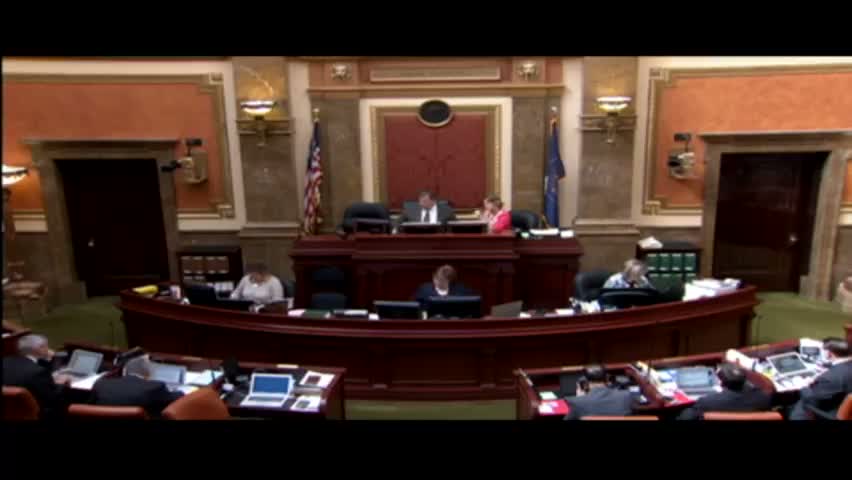
The Utah House passed first substitute Senate Bill 10 on a 52–18 vote after floor debate on Feb. 11, 2015. Representative Andraig, the bill sponsor, said the compact would allow Utah to join roughly 37 other states in sharing putative‑father registry information so potential biological fathers can be notified before an adoption is finalized.
Supporters framed the measure as a procedural fix to reduce later disputes. "This creates the sharing of that information," Representative Andraig said, adding the compact is voluntary and "simply plugging into what already exists" such as other interstate exchanges for vital records. He said the compact would give fathers an earlier chance to notify authorities and seek paternity testing before an adoption is completed.
Opponents, led by Representative Nelson, said existing Utah law already provides protections for unwed fathers who follow steps such as filing a paternity action and an affidavit of willingness to support the child. "Our current law provides full protection," Nelson said, arguing the compact would create extra bureaucracy, delay placements and "further discourage marriage." Nelson said the proposed process could complicate adoptions and create uncertainty for mothers and adoptive parents.
The House debated the policy tradeoffs, including whether interstate sharing would materially improve notice versus adding steps for registrars. After discussion, the chamber voted to return the bill to the Senate for further consideration.
The measure as passed will be sent back to the Senate for signature of the president. The House record shows Representative Andraig led the presentation and Representative Nelson the principal floor opposition.