Get Full Government Meeting Transcripts, Videos, & Alerts Forever!
Get email alerts on the Education Tech topic
No spam. Unsubscribe anytime.
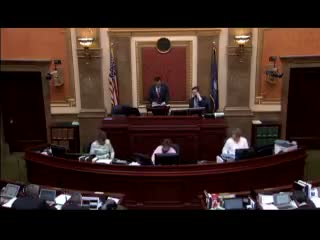
House adopts HB277 to create personalized-learning grant program and statewide digital-teaching plan
Summary
House approved first-substitute HB277 to establish a grant program and adopt the State Board’s 'essential elements' for digital teaching and learning; sponsor cited a $100 million master plan with initial appropriations recommended at $10M ongoing and $15M one-time. Vote: 44–28.
Representative Notwell presented first substitute HB277, describing it as the legislative response to the 'essential elements' statewide plan for digital teaching and learning. The bill creates a qualifying grant program, asks the State Board of Education to adopt rules, gives UETN flexibility to negotiate on behalf of LEAs, consolidates some existing grant programs and seeks funding for the new program.
Notwell explained the master plan was developed by a task force that met extensively and that the plan covers seven elements beyond equipment — including change management, professional development, leadership and infrastructure. He referenced a fiscal note for the master plan at roughly $100 million, while the public education subcommittee recommended $10 million ongoing and $15 million one-time as an initial appropriation.
Floor debate raised familiar concerns: cost and whether funds should be provided as unrestricted increases to the WPU rather than targeted grants, the need to emphasize infrastructure and teacher training, and the desirability of bottom-up, locally driven implementation. Representative Christianson offered a friendly amendment (Amendment 4) to require any federal funding, federal requirement or national program related to the state-adopted program to require separate express approval; the amendment was accepted as friendly and passed.
Supporters emphasized that the program is voluntary, locally driven and not a top-down mandate. Opponents focused on the fiscal trade-offs and the need to prioritize teacher training and infrastructure in districts that lack IT support. Voting concluded: first substitute HB277 passed the House 44 yes to 28 no and will be referred to the Senate for further consideration.