Get Full Government Meeting Transcripts, Videos, & Alerts Forever!
Get email alerts on the Medicaid Pdl topic
No spam. Unsubscribe anytime.
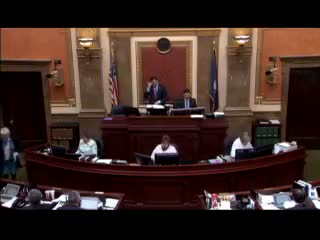
Representative Ward advances substitute to include psychiatric medicines on Medicaid preferred drug list
Summary
Representative Ward presented a second-substitute to HB18 to add psychotropic medicines to Utah’s Medicaid Preferred Drug List, citing estimated annual savings ($3.7M state, $8.6M federal), grandfathering and physician-discretion protections, and an exemption for long-acting injectables; the House adopted the substitute and circled the bill for cleanup.
Representative Ward framed HB18 as a targeted change to reduce Medicaid spending on mental-health medications by allowing the Department of Health to include psychiatric drugs in the Medicaid Preferred Drug List (PDL).
He told colleagues Utah currently pays the full asking price for many psychotropic medications and that other states (47 of 50) include these medicines on their PDLs. Ward said the state’s existing PDL saves roughly $45 million annually and estimated adding psych meds could save an additional $3.7 million in state funds and $8.6 million in federal funds.
Ward enumerated several patient protections included in the substitute: grandfathering for patients stable on a non-preferred drug, explicit physician discretion to authorize non-preferred medicines (rather than administrative staff), extension of renewal periods (from one to two years), and exempting long-acting injectable medications used when patients cannot reliably take oral medication.
Representative Ray moved the second substitute and explained that the structure was voluntary for prescribers (a three-year measurement period, with thresholds for continuation or automatic prior authorization if targets are not met), and that the PDL enables the state to negotiate prices — including participation in a multistate consortium.
The House adopted the second substitute; sponsors asked to ‘circle’ the bill briefly to perform technical cleanup prior to transmittal. The bill was circled to permit staff edits and procedural checks before being sent on to the Senate.