Get Full Government Meeting Transcripts, Videos, & Alerts Forever!
Get email alerts on the Federalism And Policy topic
No spam. Unsubscribe anytime.
Sen. Mike Lee tells Utah House federal power should return to states; fields questions on Medicaid, lands and sentencing
Summary
U.S. Senator Mike Lee addressed the Utah House in a Committee of the Whole, urging more state control over land management, describing bipartisan federal sentencing reforms he supports, and answering representatives’ questions on Healthy Utah funding, immigration visas and privacy protections for electronic communications.
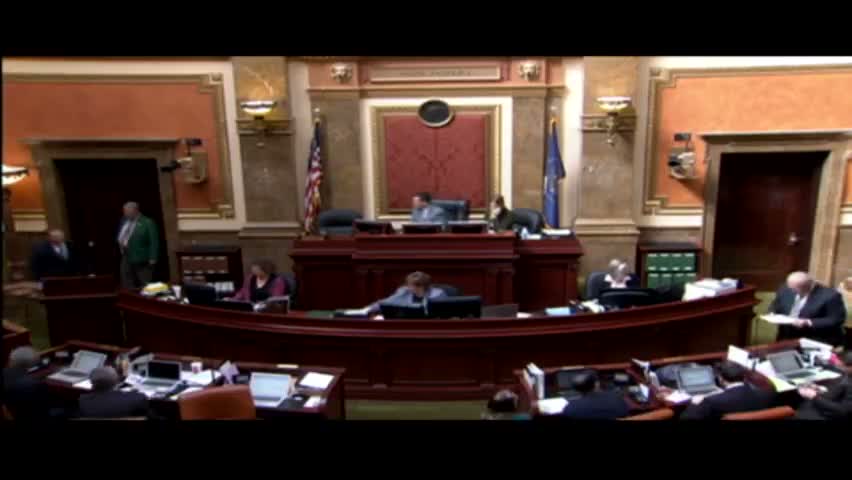
Sen. Mike Lee (R-Utah) spoke to the Utah House of Representatives in a Committee of the Whole on Feb. 17, 2015, urging lawmakers to shift decision-making from federal bureaucracies to state authorities and outlining several federal policy priorities. Lee praised local veterans and mothers before summarizing a 2014 report of his legislative work and inviting questions from representatives.
Lee urged lawmakers to reframe the public-lands debate as a question of who makes land-use decisions rather than whether to have public lands, arguing that more local input would improve accountability and economic outcomes. He pointed to transfers done historically in States such as Illinois and Missouri as precedents and said educating the public about the fiscal and management benefits of state control would be essential.
On criminal justice, Lee described the Smarter Sentencing Act — bipartisan legislation he is advancing in Congress with Senators Dick Durbin and Pat Leahy — as a priority to narrow excessive mandatory federal penalties and reduce the federal prison population growth. He said the issue crosses partisan lines and that the bill enjoys some bipartisan support in the Senate judiciary committee.
Lee also described new legislation he is pursuing with Sen. Leahy to update the Electronic Communications Privacy Act to require warrants for older emails, saying current federal law (enacted in 1986) permits reading electronic communications without a warrant in some circumstances and that he views that as unlawful.
During a question-and-answer period, Representative Doug Ray (chair of social services budgeting) asked about the stability of the federal match for Utah’s Healthy Utah Medicaid plan. Lee said he did not expect immediate defunding in the current year but warned of political uncertainty in future years while reiterating Republican efforts to repeal and replace the Affordable Care Act. He characterized repeal-and-replace as a process that will require multiple competing proposals before coalescing around a comprehensive plan.
Representatives pressed Lee on strategies to press for transfer or local control of federal lands. Lee advised focusing public messaging on accountability rather than simply rejecting public lands, and on highlighting the economic and educational benefits of devolving management decisions to the state level.
On labor and immigration, Representative Draxler described difficulty for agricultural employers securing temporary worker visas; Lee cited prior targeted proposals such as the DASH Act and said he would work on simplifying legal pathways where appropriate, distinguishing these targeted fixes from broader, more controversial omnibus immigration packages.
The House accepted Lee’s remarks and then dissolved the Committee of the Whole to resume the regular session.