Get Full Government Meeting Transcripts, Videos, & Alerts Forever!
Get email alerts on the Legislative Roll Call topic
No spam. Unsubscribe anytime.
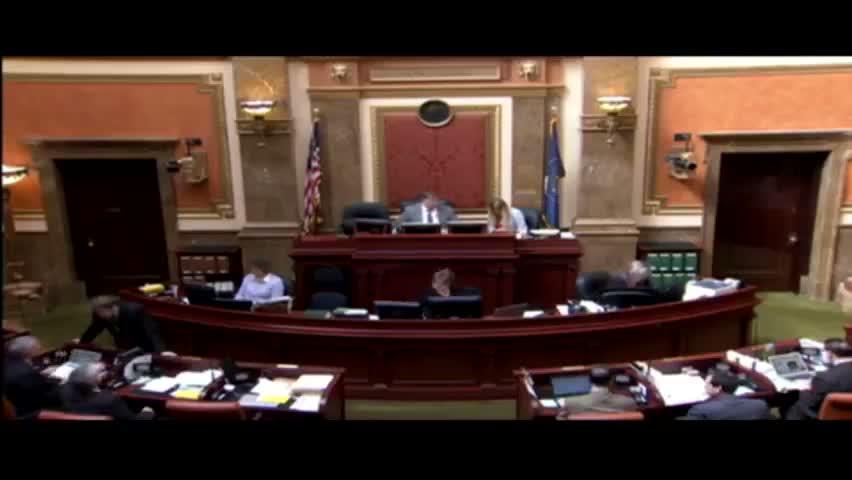
House clears several consent and third‑reading items, including digital health and offender‑testing changes
Summary
On Feb. 11 the Utah House passed multiple bills on consent and third reading: SP 19 (Digital Health Services Commission reauthorization) passed 71‑0; SB 113 (offender testing amendments) passed 70‑0; Second Substitute HB 96 (real estate transaction amendments) passed 71‑0 after adopting an amendment; Second Substitute HB 177 (voting law modifications) passed 70‑0.
The Utah House of Representatives on Feb. 11 approved several bills on the consent and third‑reading calendars and adopted committee reports to advance additional measures.
On the consent calendar, SP 19 (Digital Health Services Commission), sponsored in the House by Representative Barlow, was presented as a reauthorization of the Utah Digital Health Service Commission Act; Representative Barlow said the bill "basically just reauthorizes the Utah digital health service commission act," and the body approved SP 19 unanimously (71‑0). The measure will be returned to the Senate for the president's signature.
On the Senate third‑reading calendar, Representative Perry explained SB 113 (offender testing amendments) as allowing a judge to order an HIV test or blood draw in cases where an alleged victim may have been exposed, noting a 72‑hour treatment window; the bill passed 70‑0. Representative Perry described the procedure as similar to existing DUI blood‑draw practices and said a judge would need to find probable cause.
On the House third‑reading calendar, members uncircled and considered Second Substitute HB 96 (real estate transaction amendments). Representative Green moved and the House adopted Amendment 1, which sponsor said clarifies language (line 106) and does not materially change the bill’s substantive requirements. Representative Greene disclosed prior industry work related to the bill’s subject. After consideration the second substitute HB 96 passed 71‑0 and will be transmitted to the Senate.
The House also uncircled and passed Second Substitute HB 177 (modifications to voting law), described as minor, clarifying changes to procedures including absentee ballots and consistency across counties; the bill passed on the floor 70‑0 and will be sent to the Senate.
Committee reports from economic development, government operations, political subdivisions, and revenue and taxation were also adopted and placed on third‑reading or consent calendars as noted by the reading clerk and committee chairs.
All bills passed on Feb. 11 will proceed to the Senate or to signature as appropriate.