Get Full Government Meeting Transcripts, Videos, & Alerts Forever!
Get email alerts on the Education Licensing topic
No spam. Unsubscribe anytime.
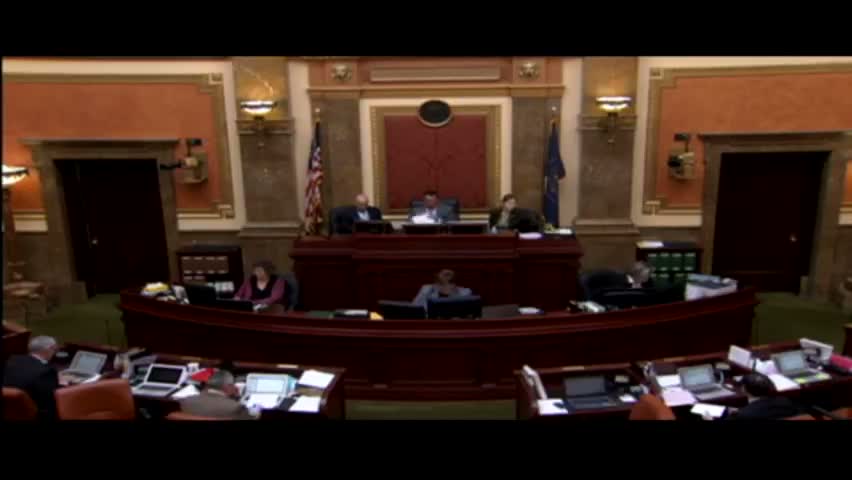
House passes educator‑licensing bill after extended debate on administrator qualifications
Summary
House Bill 197, which broadens the state licensing language to allow nontraditional administrative qualifications (for example, competency‑based or non‑M.Ed. degree pathways), passed the House 43–30 after substantial floor debate over whether the change would de‑professionalize school leadership.
The Utah House on Feb. 18 passed House Bill 197, an educator‑licensing measure aimed at broadening pathways to administrative certification. The final floor vote was 43 yes to 30 no. Backers said the change gives local districts more options to recruit leaders with site‑management, business or public‑administration training; opponents — largely former teachers — argued the bill risks de‑professionalizing school leadership and undermining instructional credibility.
Sponsor Representative Coleman said the bill makes technical changes to licensing language so that administrative licensing is not narrowly limited to traditional education degrees. “This allows [the State Board of Education] from there to do whatever they want with the licensure,” Coleman said, describing the intent as expanding options without mandating hires with non‑education backgrounds.
Several members who identified themselves as career educators warned the House that administrators without classroom experience could lack the instructional credibility needed to evaluate teachers and lead schools. Representative Moss, a former teacher, described classroom experience as critical for trust and effective evaluations. Representative Briscoe cited Rice University’s REAP program and noted many such programs require principal certification as part of graduation, but others remained skeptical that an MBA or non‑education degree would include necessary school‑law and instructional supervision training.
Procedural debate included a successful motion to end debate (division on a call of the question), which carried 50–23 and allowed the House to move to final summation and a recorded vote. The sponsor said the change is an "and" bill — it expands options but does not require districts to hire anyone lacking traditional credentials. The bill passed and will be referred to the Senate for consideration.
What’s next: HB 197 will be transmitted to the Senate for consideration. Implementation details will be shaped by rules the State Board of Education may adopt under the clarified licensing language. The bill’s backers and critics both noted the State Board and local districts retain significant authority over licensure criteria and hiring practices.