Get Full Government Meeting Transcripts, Videos, & Alerts Forever!
Get email alerts on the Charter School Funding topic
No spam. Unsubscribe anytime.
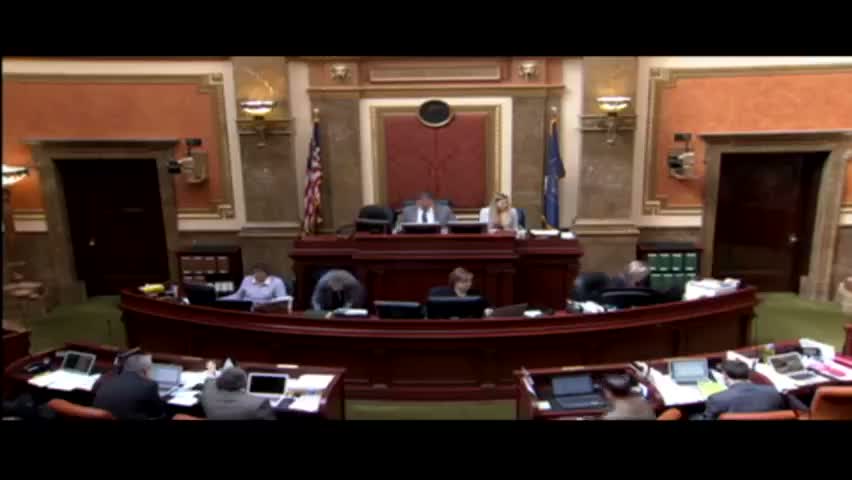
Utah House narrows disparity in charter school capital funding, passes HB 119
Summary
The Utah House on Feb. 11 passed HB 119 to standardize the charter school local replacement formula so all districts contribute 25% of local property‑tax replacement; the change is estimated to shift about $2.8 million in district contributions statewide. The bill passed 45‑27 and moves to the Senate.
The Utah House of Representatives on Feb. 11 approved House Bill 119, a measure that removes language allowing a lower contribution from some school districts to the charter school local replacement formula and instead requires all districts to provide 25% of local replacement funding for charter school capital costs. The bill passed on third reading, 45‑27, and will be referred to the Senate for further consideration.
Representative Last, sponsor of HB 119, told the House the change "puts all the districts on the same footing" and framed the bill as an equalization effort. He said the bill removes the "lesser of" language from the existing formula so wealthier districts that previously paid a smaller percentage will be required to contribute the same 25% as other districts. Last said the statewide fiscal impact of making the change is about $2,800,000.
The sponsor and several members stressed that HB 119 is not intended to increase charter schools' total funding but to change how property‑tax replacement is allocated. "This bill isn't really intended to give more money to the charters," Last said, adding the monies collected from districts would likely be preserved in state funding and could be used to support the weighted pupil unit or other basic school funding streams.
Opponents and concerned members argued the change shifts local property‑tax burdens and urged caution. Representative Nelson asked whether charter schools could be given taxing authority so they would have their own revenue source instead of relying on district levies; he said he was "torn" because he wanted to help charters but recognized the districts' objections to sharing locally raised tax revenues. Representative Briscoe urged study and suggested tabling or holding the bill to allow a task force to examine longer‑term policy options, calling the broader funding changes currently proposed by appropriations "huge."
Multiple members also flagged a pending action in the public education appropriations committee that would move local replacement to 50% statewide — a policy with a far larger fiscal effect. Sponsor Last and other members noted the 50% proposal (from appropriations) would have an impact in the tens of millions ($20M‑$22.5M was cited during floor remarks), and that HB 119 should be considered in the context of those ongoing budget deliberations.
Representative Moss noted that roughly 60% of the money affected by HB 119, if enacted, would be covered by Salt Lake County school districts (Granite, Murray, Jordan, Salt Lake), asking members from those districts to weigh equity concerns in their votes. Other members, including Representative Cunningham and Representative Lisonbee, described local operational impacts and the need for clearer statewide funding policy before making major shifts.
After debate and a motion to end debate, the House voted 45‑27 to pass HB 119. The bill will be transmitted to the Senate for further consideration.