Get Full Government Meeting Transcripts, Videos, & Alerts Forever!
Get email alerts on the Adoption Registry topic
No spam. Unsubscribe anytime.
House narrowly approves resolution urging interstate sharing of putative‑father registry information
Summary
The Utah House on Feb. 18 passed Senate Joint Resolution 1, which urges states to share putative‑father registry information and asks Congress to promote a nationwide system. Supporters said it promotes information-sharing; opponents said it could inject uncertainty into adoptions. The resolution passed 38–34.
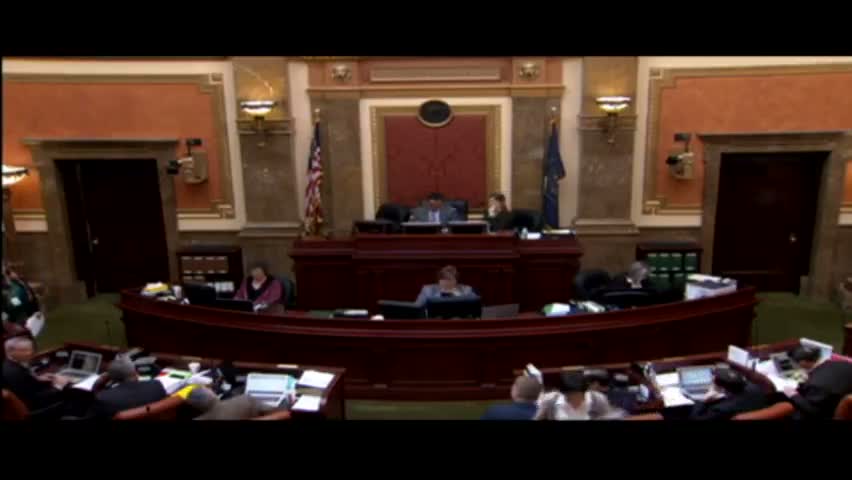
The Utah House on Feb. 18 approved Senate Joint Resolution 1, urging interstate sharing of putative‑father registry information and calling on Congress to consider establishing a national framework. The resolution passed by a narrow 38–34 vote and was signed by the Speaker for transmission to the Senate.
Representative and drag, the House sponsor, told colleagues the resolution is a limited information‑sharing measure that encourages states participating in existing compacts to exchange registry data and urges other states to adopt similar systems. “What this resolution does is calls on the states who are already participating ... to also engage in the compact so it can be as robust as possible,” the sponsor said, stressing the resolution does not change Utah adoption law.
Representative Nelson opposed the measure, saying an interstate registry would introduce uncertainty into the adoption process and could give putative fathers a way to interfere with finalized adoptions. Nelson argued that under current Utah law unwed fathers do not automatically have parental rights and that allowing registration across multiple states could enable late challenges to adoptions. “This effort to establish an interstate registry introduces all kinds of uncertainty because now, under this law, the father would be able to register anywhere in the country,” Nelson said.
Debate centered on whether the resolution merely facilitates information-sharing or whether it could alter practical outcomes for adoptive families. The sponsor repeatedly said the resolution does not change Utah’s adoption law and that the goal is to surface potential conflicts earlier in the process so they can be resolved before relinquishment.
The House voted after a brief negotiated extension of floor time. The clerk recorded 38 yes votes and 34 no votes; the resolution passed and will be transmitted to the Senate for further handling.
What’s next: SJR 1 will be transmitted to the Senate president for consideration and, because it is a resolution urging interstate cooperation and federal involvement, its practical effects depend on actions by other states and Congress.