Get Full Government Meeting Transcripts, Videos, & Alerts Forever!
Get email alerts on the Grandparent Rights topic
No spam. Unsubscribe anytime.
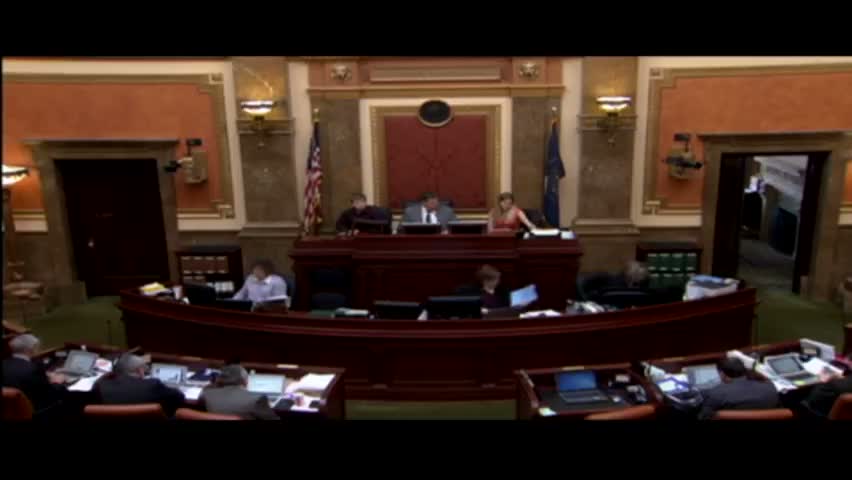
House passes bill preserving judges' discretion for grandparent visitation, rejects restrictive amendment
Summary
The House approved HB164 to allow courts to consider grandparent visitation after parental-rights termination; an amendment meant to prevent grandparents from reintroducing terminated parents failed 18–46, and the bill passed 58–11.
Representative Christiansen presented HB164, which seeks to preserve a court's ability to consider grandparents for visitation when parental rights have been terminated. Christiansen described a legislative audit of the Division of Child and Family Services and said the division receives large federal funds that create time pressures on termination decisions: "they are receiving $47,000,000 in federal money," he said, explaining the context for the bill.
Opponents and some family-law practitioners expressed concern about potential interference with adoptive parents and the administration of adoption. Representative Westwood moved Amendment No. 1 to ensure grandparents granted visitation could not use that access to attempt to reintroduce terminated parents; the sponsor and others argued that judges already have discretion to set conditions and that a statutory restriction could hamper judicial decision-making.
The motion to amend (Amendment No. 1) failed on a division vote, with 18 yay and 46 nay. After further debate — including statements that the family-law section of the bar had mixed input — the House passed HB164 by a roll-call vote of 58–11. The bill will be referred to the Senate for further consideration.
Next steps: HB164 will be transmitted to the Senate following House passage.