Get Full Government Meeting Transcripts, Videos, & Alerts Forever!
Get email alerts on the School Transportation topic
No spam. Unsubscribe anytime.
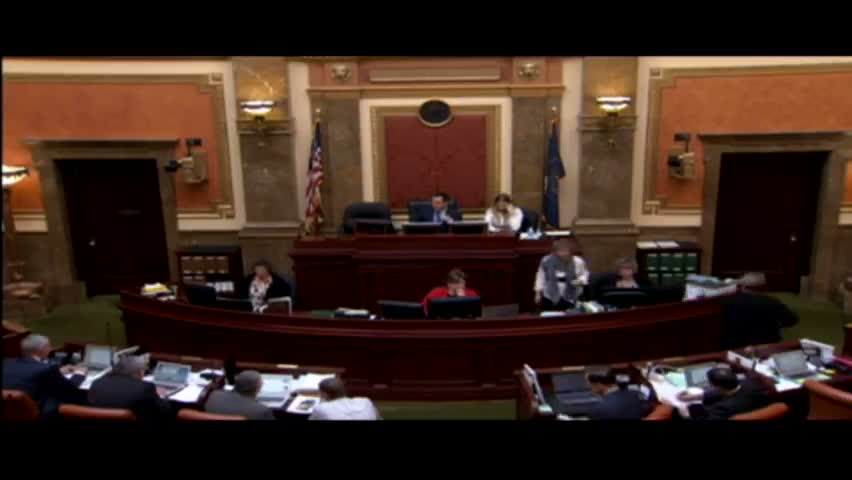
Utah House Approves $20M Plan for Clean-Fuel School Buses and Infrastructure
Summary
The House passed second substitute HB49 on Feb. 13 to fund replacement and limited retrofitting of older school buses and supporting infrastructure, with a $20 million fiscal note and a 47-22 final vote; members debated distribution, retrofit costs, and education-fund tradeoffs.
The Utah House on Feb. 13 approved second substitute House Bill 49, a $20 million initiative to help school districts replace aging diesel buses and build related fueling or charging infrastructure. Representative Handy, the sponsor, said the bill would fund bus replacement and a rule-driven grant process overseen by a pupil transportation task force and the Division of Air Quality (DAQ).
Handy described technical mitigation options for buses that might remain in service or be sold, including diesel oxidation catalysts and closed crankcase ventilation filters, and emphasized testing and rulemaking by the task force. "These are legitimate devices," he said, cautioning members that the proposal was designed to protect students and public health. The sponsor also cited an anecdote from firefighters about cancer risks tied to diesel exhaust to underscore safety concerns.
Fiscal details discussed on the floor included an approximate $20 million fiscal note, with working parameters of roughly $13 million for new-bus replacement and $7 million for infrastructure. Districts would be required to provide a percentage match to receive grants. Handy said the transportation task force would establish rules on eligibility and that districts and charter schools statewide could apply. He also noted the Pupil Transportation Task Force had surveyed districts and identified about 2,900 buses in the statewide fleet; the proposal included guidance for disposition of replaced buses and potential resale conditions when retrofitting met emission criteria.
Opponents and questioners raised concerns about whether the distribution of funds would disproportionately benefit some counties (notably Davis and Weber), who have a larger share of older buses, and whether the state should use education-fund dollars for this initiative. Representative Kennedy asked about tradeoffs with the weighted pupil unit and the broader education budget, noting competing priorities.
After extended debate and a successful previous-question motion to end debate, the House approved second substitute HB49 on a 47-22 roll call. The bill will be transmitted to the Senate for consideration. The bill’s language authorizes rulemaking to set testing, retrofit, resale and grant-application procedures; the exact allocation and administrative rules will be determined in follow-up rulemaking and appropriations review.
What’s next: The measure, having passed the House, will proceed to the Senate; appropriators will examine the fiscal note and matching-share mechanics during the budget process.