Get Full Government Meeting Transcripts, Videos, & Alerts Forever!
Get email alerts on the Legislation topic
No spam. Unsubscribe anytime.
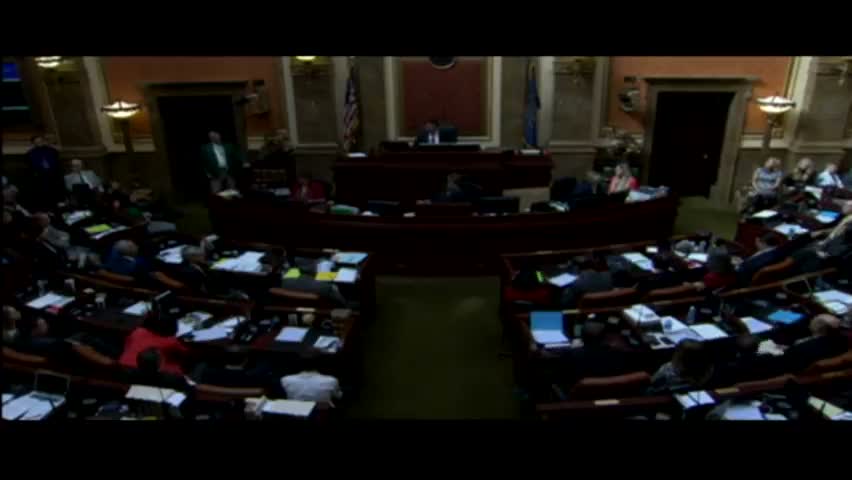
Utah House introduces dozens of bills and adopts rules committee report, assigning measures to standing committees
Summary
On opening day the House clerk read the short titles of more than a hundred bills and joint resolutions for first reading; the rules committee report assigning bills to standing committees was adopted and select measures were lifted to the third-reading calendar.
The Utah House read hundreds of short titles and resolutions for first reading on the opening day of the 60th Legislature and adopted a rules committee report that assigned those bills to standing committees.
The reading clerk recited a long list of House bills (HB 1 through HB 166 and many intermediate numbers) and House joint resolutions (HJR 1–11) covering topics from higher-education budgets, transportation and motor-vehicle emissions, to Medicaid management and education amendments. "These bills are read for the first time and are referred to our rules committee," the reading clerk said.
The rules committee (chair identified in the report as Michael Noel) recommended assignments of bills to committees including Business and Labor; Economic Development and Workforce Services; Education; Government Operations; Health and Human Services; Judiciary; Law Enforcement and Criminal Justice; Natural Resources, Agriculture, and Environment; Political Subdivisions; Revenue and Taxation; and Transportation. The House adopted the rules committee report as read and the Speaker formally assigned the listed bills to those committees.
The committee also recommended several bills and resolutions be lifted from rules, read a second time, and placed on the third-reading calendar, a procedural step that advances those measures toward floor consideration. Examples the committee asked to lift included HJR 2 (reappointing legislative general counsel), HB 28 (Medicaid management of emergency department utilization), HB 17 (motor vehicle emissions), and HB 21 (department of workforce services sunset authorization).
What happens next: referred bills will be scheduled for standing committee hearings where the measures will receive committee-level debate, amendments, and votes before any advance to third reading.
Sources: reading clerk and rules committee report recorded on the House floor.