Get Full Government Meeting Transcripts, Videos, & Alerts Forever!
Get email alerts on the Education topic
No spam. Unsubscribe anytime.
Utah House adopts Native American education amendments after debate over appointment authority
Summary
The House passed House Bill 33, the American Indian/Alaskan Native Education Amendments, after a floor debate over whether the state board or the superintendent should appoint commission members. A substitute amendment adopting 'State Board of Education' language passed 42–32; final passage was 71–2.
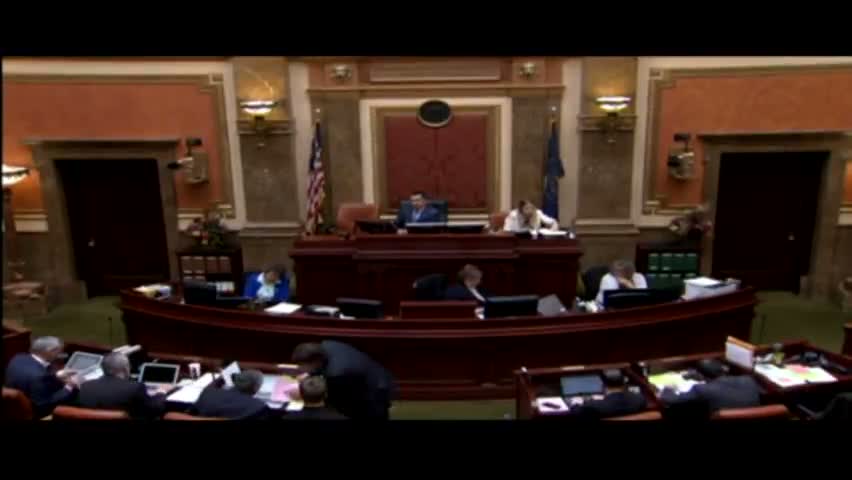
The Utah House of Representatives on Jan. 27 passed House Bill 33, the "American Indian, Alaskan Native Education Amendments," after a floor debate over who should appoint additional members of a new commission aimed at addressing educational achievement gaps for Native American students. Lawmakers adopted a substitute amendment that inserts "State Board of Education" in place of language naming the superintendent as appointing authority, and the bill passed the House 71–2 and was transmitted to the Senate for consideration.
Supporters said the bill is the product of negotiations with tribal groups and the Native American legislative liaison committee and is intended to produce a state plan and focused recommendations quickly. "It is the first substantive thing we've been able to do to address the achievement gap for Native American children," said Representative Draxler, the bill sponsor. He also described some changes as intended to ensure the commission can complete work by December and not become an unfocused "sounding board."
Opponents of the original wording argued the change preserves constitutional responsibilities assigned to the elected state board. "Article 10 says that the elected state school board shall generally control and supervise the free public education established and maintained by this body," Representative Christiansen said during debate, urging that appointment authority remain with the board. He warned that statutory language granting appointment power to the superintendent would set a precedent of bypassing the constitutionally delegated role of the board. "We're bypassing the state board twice," he said, pointing to textual inconsistencies the substitute sought to correct.
Those defending the sponsor's original language argued the superintendent, as the day-to-day director, is the practical actor to carry out appointments and the work of the commission. "This is essentially a needless discussion of semantics," Draxler said, urging the House to respect the agreement reached with tribes and to allow the superintendent to act under the board's direction.
After extended floor debate, the House approved the substitute motion to amend by voice and division; the chair announced the substitute had received 42 yes votes and 32 no votes. The body then adopted a separate clarifying amendment (Amendment No. 4), described by its mover, Representative Thurston, as designed to remove redundancy, clarify scope and reporting requirements for the one-year commission and to keep the commission focused on producing the state plan.
Final consideration of the bill followed summation by the sponsor. The clerk announced that House Bill 33 "having received 71 yay votes, 2 nay votes, passes with a favorable recommendation and will be forwarded to the Senate for consideration." No specific funding sources or an implementation timeline beyond the commission's one-year direction were specified on the floor record.
The House also heard multiple committee reports and referral recommendations during the same session; several bills were assigned to standing committees or placed on calendars, but HB 33 was the principal substantive floor action involving debate and recorded votes on amendments and final passage.
The bill now moves to the Utah Senate for further consideration.