Get Full Government Meeting Transcripts, Videos, & Alerts Forever!
Get email alerts on the Campaign Finance topic
No spam. Unsubscribe anytime.
House approves first substitute to tighten disclosure of anonymous campaign donations after hours of debate
Summary
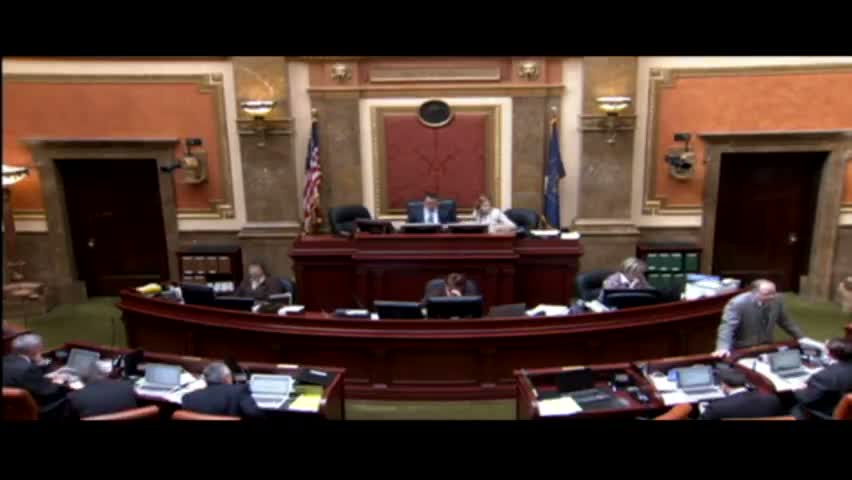
After lengthy floor debate and multiple substitute motions, the Utah House on Feb. 3 passed first substitute House Bill 91, which narrows anonymous campaign donations by requiring candidates who receive anonymous contributions over $50 to transfer the funds to a nonprofit or government entity if the donor cannot be identified; the measure passed 66–9 and will go to the Senate.
House Bill 91, a campaign finance bill aimed at addressing anonymous contributions, passed the Utah House on Feb. 3 after an extended floor debate, multiple substitute motions and procedural votes.
Representative Rebecca Powell, the bill sponsor, said HB 91 responds to recurring incidents in which anonymous cash donations — in one cited case amounts of $5,000 and $6,600 left for a municipal candidate—created uncertainty in reporting and raised transparency concerns. Powell summarized the bill’s core provisions as preserving the current $50 undisclosed threshold while prohibiting candidates from accepting a campaign contribution without a donor name and requiring candidates who receive anonymous contributions above $50 to remit those funds within 30 days to a 501(c)(3) nonprofit or a governmental entity instead of spending them.
Representative Brad Dee offered a first substitute that removed a provision that could be read as criminalizing donors and clarified that penalties apply to reporting entities (candidates) rather than anonymous donors. Dee framed his substitute as addressing fairness for citizens who might unknowingly give anonymous funds, and said the substitute retained the requirement that recipients turn anonymous over‑$50 donations over to an eligible organization.
Representative Spendlove proposed a more expansive second substitute that would have eliminated the $50 aggregate threshold and required broader disclosure of small donations, arguing it would close a loophole that could be used to aggregate many sub‑$50 anonymous contributions into large undisclosed sums. Spendlove said his substitute would maximize transparency and praised small‑dollar donor disclosure as a positive practice.
Members debated policy tradeoffs for an extended period. Representative Brad Dee and Representative McKay proposed options to allow candidates either to file an anonymous line on their report (so voters can see the amount labeled “anonymous”) or to follow the bill’s prescribed route of turning the anonymous money over to charity or government. Opponents, including Representative Draxler, said the measure (particularly the second substitute) risked mixing distinct policy questions and urged the body to treat them separately.
Representative Spendlove’s motion to adopt the second substitute failed in floor action. The House proceeded to adopt the first substitute under Brad Dee’s name and then voted on the resulting first substitute House Bill 91. The first substitute passed 66 yes to 9 no and will be transmitted to the Utah Senate for consideration.
The House’s action leaves candidates required to either identify donors or, when the donor cannot be identified and the amount exceeds $50, to remit the money to a nonprofit or government unit within 30 days. Sponsors and supporters framed the change as a step to preserve transparency without criminalizing unwitting donors; critics raised concerns about unintended consequences for well‑intentioned anonymous supporters and urged separate consideration of stronger disclosure regimes.
What happens next: HB 91 will be sent to the Utah Senate for its consideration. If the Senate takes up different amendments, the House could be asked to concur or to appoint conferees.
Speakers quoted in this article are drawn directly from the House floor transcript for Feb. 3, 2015 and are attributed to the speakers who appeared on the record.