Get Full Government Meeting Transcripts, Videos, & Alerts Forever!
Get email alerts on the Children Hearing Aid topic
No spam. Unsubscribe anytime.
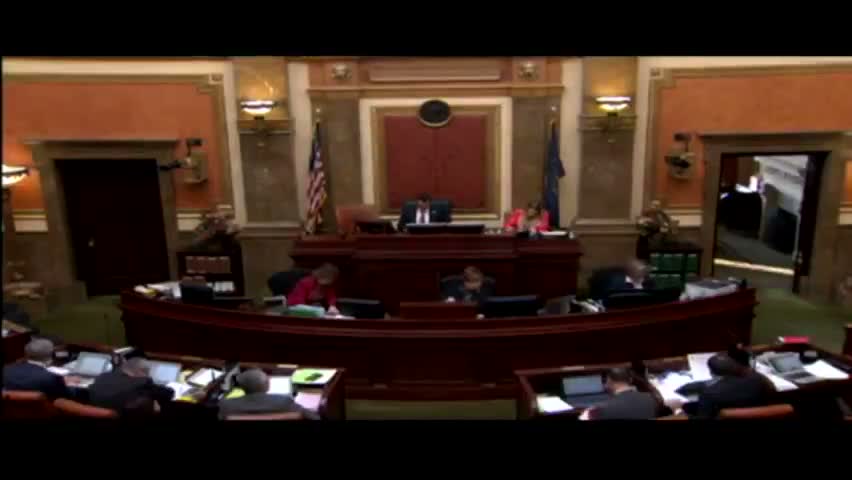
House passes bill to make children's hearing‑aid pilot permanent after floor debate
Summary
After debate over whether to extend or make permanent a pilot that has served 32 children, the House passed HB 18 to convert the children's hearing‑aid pilot into an ongoing program, extend eligibility to age 6 and authorize a one‑time appropriation the sponsor cited as about $1,502,000.
The Utah House passed House Bill 18, which converts a pilot children’s hearing‑aid program into an ongoing program and extends eligibility to children up to age six. The bill passed the House 59‑12 and will be transmitted to the Senate.
Sponsor's case: Representative Edwards, the bill sponsor, said the pilot — in operation roughly 15 months — has fitted 32 children in nine counties and reaches both rural and urban families. "We all know the importance of language acquisition in children and that exposure to language at an early age is really critical. There is no time to lose," Edwards said, adding that delays in obtaining hearing aids can lead to lasting learning and cognitive deficits.
Debate and substitute motion: Representative Thurston moved a substitute to extend the pilot for one more year to study program needs rather than convert it to an ongoing program. Thurston said the pilot's small sample (32 children) and the incomes of affected families prompted his caution: "I would propose that rather than make this a permanent program ... that we extend this pilot program for 1 more year specifically with intent of finding out why these families are having a hard time paying for these hearing aids." The substitute failed on a recorded vote, 27 yes and 43 no.
Costs and program details: The sponsor and supporters said bulk purchasing reduced expected costs; the advisory committee reported an average per‑device cost of about $1,500 (many children need two devices). Representative Edwards cited a one‑time fiscal figure of $1,502,000 associated with converting the pilot to an ongoing program and emphasized required family outreach and wraparound services tied to participation.
Why it matters: Supporters framed the measure as a small investment that prevents much larger long‑term education and special‑education costs for children with untreated hearing loss. Opponents favored more data from an extended pilot before committing ongoing funds.
Next steps: HB 18 will proceed to the Senate for consideration. The House record shows the sponsor and multiple members urging timely action to avoid developmental delays for affected children.