Get Full Government Meeting Transcripts, Videos, & Alerts Forever!
Get email alerts on the Legislative Actions topic
No spam. Unsubscribe anytime.
Utah House passes HB41 to speed local economic deals and HB17 targeting modified diesel smoke
Summary
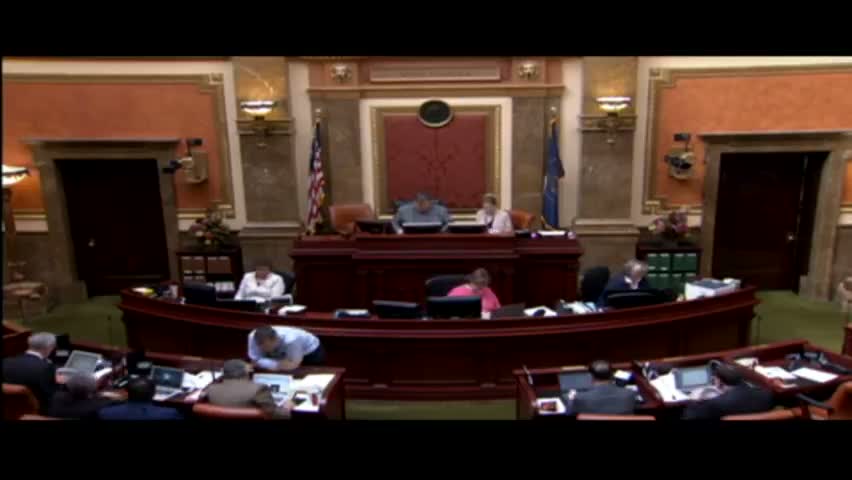
On Jan. 28, 2015 the Utah House passed First Substitute HB41 (local economic development amendments) 62–7 and First Substitute HB17 (motor vehicle emissions) 61–9 and referred both to the Senate; several standing committee reports were also adopted and many bills were assigned to committees.
The Utah House on Jan. 28, 2015 approved two substantive measures and received multiple committee reports before adjourning.
First Substitute House Bill 41, presented by Representative Snow, passed on a voice-and-count vote, 62–7. Snow told members the bill stems from a 2013 legislative task force on economic development and would allow a narrowly prescribed, site-specific streamlined process under the Community Development Act to help communities recruit businesses. Snow used the example of Family Dollar in St. George to illustrate how local incentives and quick turnaround can attract private investment and new jobs; he said the measure requires property-owner consent, notice and agreement from affected taxing entities.
First Substitute House Bill 17, described by its sponsor as a motor-vehicle emissions amendment, passed 61–9. The sponsor said the substitute clarifies exhaust rules, keeps the offense as a class C misdemeanor for a first violation (first fine remains $50) and allows judicial discretion to increase fines for repeat offenders (the sponsor said judges could impose fines up to the class-C maximum of $750 for repeated violations). The sponsor said the bill targets modified diesel vehicles that deliberately emit black smoke (sometimes called "rolling coal") and exempts older vehicles and mechanical problems; the bill text referenced a model-year cutoff (2007 and newer for the stricter expectation) and left enforcement and intent to law enforcement and judicial processes.
During debate on HB17, members raised enforcement concerns: whether officers could reliably judge intent, how steep grades or heavy towing would affect visible emissions, and differences in emissions standards across counties. The sponsor replied these situations were considered, stressed that the bill targets deliberate modifications, and pointed to judicial discretion for subsequent penalties.
The House also adopted multiple standing committee reports: Business & Labor recommended HB57, HB98 and HB99 for placement on the third-reading calendar; Education reported on HB69 and HB81; and Health & Human Services reported on HB39, HB52 and HB75 (HB75 to consent calendar, HB76 returned to Rules). The Rules Committee assigned numerous bills to standing committees for further consideration.
Votes at a glance
- First Substitute HB41 (Local economic development amendments): Passed, 62–7; referred to the Senate. - First Substitute HB17 (Motor vehicle emissions): Passed, 61–9; referred to the Senate.
The House adjourned and reconvened as scheduled, with leaders noting caucus meetings and a clean-air caucus press conference at 1:45 p.m.; the body recessed to meet next on Friday, Jan. 30 at 11:00 a.m.