Get Full Government Meeting Transcripts, Videos, & Alerts Forever!
Get email alerts on the Special Session Roundup topic
No spam. Unsubscribe anytime.
Special session passes prison site resolution and several technical bills
Summary
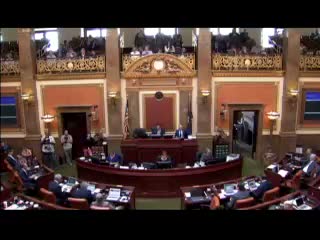
During the Aug. 19, 2015 special session the Utah House approved a prison‑site resolution (HCR 101) and approved or transmitted technical and policy bills including HB 1,001 (statute‑of‑limitations language), SB 1001 (corporate tax amendments), SB 1002 (Medicaid inspector general amendments), and SB 1003 (criminal law technical fixes).
The Utah House of Representatives used the Aug. 19, 2015 special session to act on multiple items the governor listed in the proclamation, including corrections to criminal law language, tax code amendments and changes to qualification language for the Medicaid inspector general.
House members read and advanced HB 1,001, a statute-of-limitations amendment presented by Representative Noel that narrows the triggering standard to "received actual notice" for certain state claims tied to RS 2477 roads litigation. The sponsor and several colleagues said the change clarifies intent and protects pending state claims; the amendment was adopted on the floor and the bill proceeded to placement on the House third‑reading calendar.
The House also handled several Senate bills returned for action. Senate Bill 1001 (corporate franchise and income tax amendments) and Senate Bill 1002 (Medicaid inspector general qualifications) were read and placed on calendars; floor sponsors presented brief summaries. SB 1002 passed the House 71–0 after floor presentation; the sponsor described it as a technical change to broaden the applicant pool for the Medicaid inspector general position so the hiring committee can consider a wider range of qualifications.
First substitute Senate Bill 1003 (criminal law amendments), described by the floor sponsor as technical corrections tied to the justice‑reinvestment implementation, passed the House by a recorded vote of 71–0. The sponsor said the first substitute fixes drafting errors and preserves previously intended safety and penalty structures while leaving substantive policy decisions for committee consideration where appropriate.
After some technical confusion and a brief reconsideration to correct voting issues, the House completed final passage or placement for the listed items and transmitted adopted measures to the Senate as appropriate. The session also included ceremonial remarks, a moment of silence for former security staff, birthday recognitions, and a recess.
Recorded tallies and transmitted communications are part of the official session record; the House transmitted the adopted second substitute to HCR 101 to the Senate for consideration and referred enrolled measures to staff for enrolling and signatures.