Get Full Government Meeting Transcripts, Videos, & Alerts Forever!
Get email alerts on the State Of Judiciary topic
No spam. Unsubscribe anytime.
Utah Chief Justice urges investment in treatment, technology and judges in State of the Judiciary
Summary
Chief Justice Matthew D. Duran told the Utah House the 1985 judicial‑article reforms made the state a national model, urged funding for treatment programs under Justice Reinvestment, asked lawmakers to create two judgeships and supported a recommended judicial pay increase.
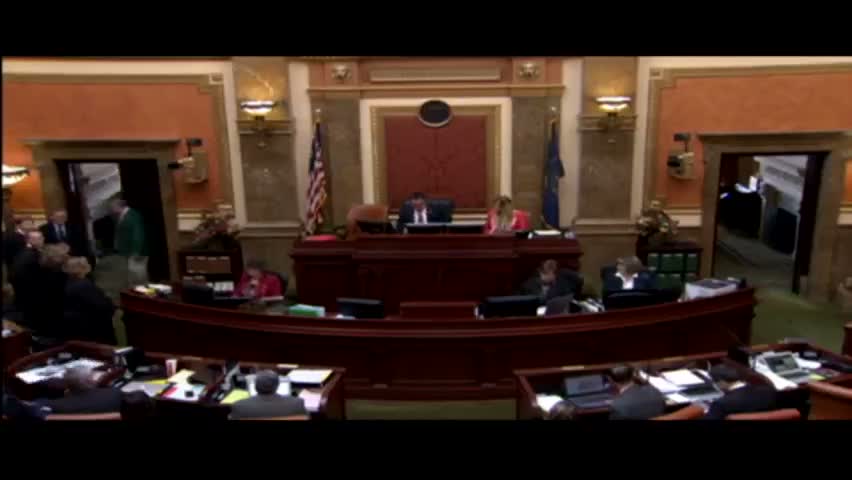
Chief Justice Matthew D. Duran delivered the annual State of the Judiciary to the Utah House, praising the 1985 revisions to the state’s judicial article and urging lawmakers to bolster treatment capacity, add judges where caseloads have risen and approve recommended judicial compensation increases.
Duran thanked the legislature for the revised judicial article — adopted in 1984 and effective July 1, 1985 — and said the system it created has produced a uniformly high‑quality judiciary. "It created a system for the selection of judges that excises politics from the process and ensures that Utah's judges are picked based exclusively on merit," he said, citing the nonpartisan nominating commission, governor’s nomination from a certified list and senate confirmation.
Why it matters: Duran argued that a stable, nonpartisan judiciary is essential both to protecting individual rights and to providing predictability that benefits the state's economy. He credited the judicial council governance model for enabling the courts to adopt system‑wide reforms such as expedited e‑filing during the recent financial downturn.
Three priorities before the Legislature: 1) treatment and Justice Reinvestment — Duran urged funding for substance‑abuse and mental‑health treatment as an alternative to incarceration, saying treatment is the "single most important thing we can do to break this cycle" of recidivism. He noted the state's drug courts and said some drug‑court candidates cannot be admitted because treatment slots are unavailable; he also pointed to two recently launched veterans treatment courts in Salt Lake and Provo as constructive examples. 2) judgeships — Duran asked lawmakers to pass bills to add a juvenile court judge in the Fourth District (Utah, Wasatch, Juab and Millard counties) and a district court judge in the Fifth District (Washington, Iron and Beaver counties), saying workloads threaten timely case resolution. 3) compensation — Duran described a judicial compensation commission recommendation for a phased increase over two years to maintain applicant pools and judicial quality.
Quotations and evidence: Duran said the revised judicial article "has worked out for the citizens of Utah in enormously beneficial ways" and described three structural changes it enabled: merit selection, uniform governance through a judicial council and accountability mechanisms such as the judicial conduct commission and judicial performance evaluation commission. He emphasized the practical effects of those reforms: "Because of this body's foresight in creating this system, our state has now enjoyed a judiciary of uniformly high quality for the last 30 years." Duran also told lawmakers that the state routinely uses anonymous evaluations and published reports to inform retention elections so voters can "make informed decisions in voting for judges."
Background and context: Duran traced the reforms to a multi‑year constitutional effort that created an intermediate appellate court and moved Utah away from geographically fragmented governance of the judiciary. He contrasted Utah’s approach to states where judicial candidates raise large campaign sums, calling Utah’s selection and retention processes "as rigorous as can be found in any state in the union."
Next steps: Duran urged the Legislature to consider the Justice Reinvestment Initiative’s recommendations, to fund treatment resources that would expand access to drug and veterans treatment courts and to act on the judgeship and compensation proposals he described. Lawmakers reacted with applause and returned to the day’s legislative calendar.