Get Full Government Meeting Transcripts, Videos, & Alerts Forever!
Get email alerts on the Pipeline Safety topic
No spam. Unsubscribe anytime.
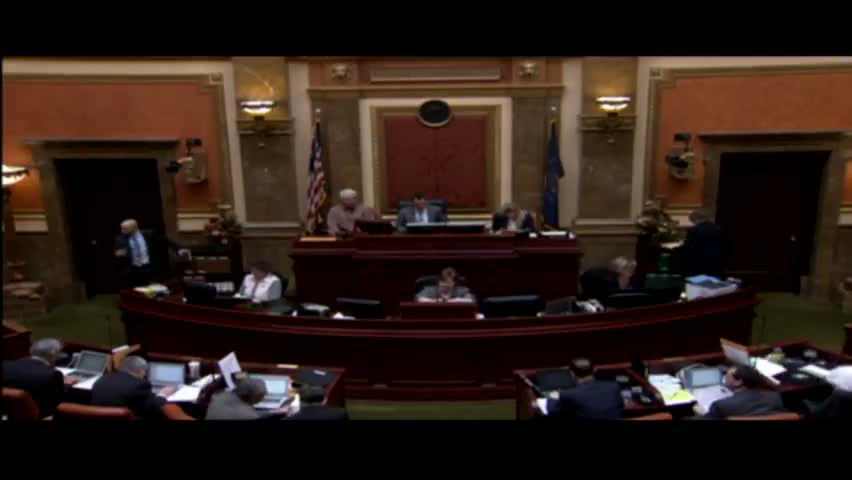
House approves substitute to HB 31 raising maximum pipeline fines to $100,000 after debate over federal funding
Summary
The Utah House passed a first substitute to HB 31 that raises the cap on pipeline safety fines from $10,000 to $100,000 to align with federal guidance and seek federal funding; debate focused on which pipelines are state‑regulated and how federal funds relate to state fines.
The Utah House of Representatives on the floor approved a first substitute to House Bill 31, a natural‑gas pipeline safety bill that raises the statutory maximum civil penalty from $10,000 per violation to $100,000.
Representative Handy, sponsor of the substitute, told colleagues the Division of Public Utilities recommended the change after discussions with the Pipeline and Hazardous Materials Safety Administration (PHMSA). He said the higher penalty level is intended to preserve the state’s ability to administer the pipeline safety program and to avoid losing federal funds: “why in the world would we increase these fines from 10,000 per violation to 100,000?” he asked rhetorically while explaining PHMSA’s expectations and the division’s review of the program.
The sponsor emphasized that the state’s intent is not to levy fines regularly but to align statutory maximums with federal standards so Utah can retain control of its safety program and continue to qualify for federal support. He noted that pipeline enforcement proceedings and the actual imposition of fines are adjudicated by the Public Service Commission, not the Division of Public Utilities.
Representative Noel questioned whether the change applies to intrastate pipelines and pressed for clarification on how federal funding and fines interact. Noel raised concerns that adopting the federal maximum could effectively increase the state’s authority to impose higher fines on pipelines wholly within Utah. Representative Handy and staff responded that the state regulates intrastate pipelines and that the Public Service Commission determines the amount of any fine; the sponsor said fines historically have been rare and noted a single prior fine of $4,500 several years ago.
The House also noted that the Division of Public Utilities inspects and audits operators (the sponsor said the division audits more than 17,000 miles of pipeline in Utah) and that Chris Parker of the division was present to answer technical questions.
After debate and some technical questions, the substitute passed on a recorded vote of 52 yes and 20 no. The measure will be transmitted to the Senate for its consideration.
The House’s action reflects a change in the statutory penalty ceiling; the transcript does not record any specific instances in which the higher maximum would be applied or a change in enforcement practice beyond aligning the statute with federal guidance.