Get Full Government Meeting Transcripts, Videos, & Alerts Forever!
Get email alerts on the Prison Relocation topic
No spam. Unsubscribe anytime.
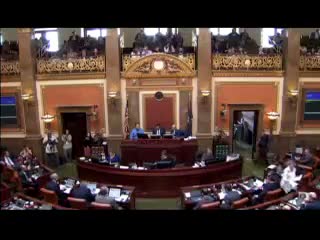
House approves Salt Lake City site for new state prison after heated debate
Summary
The Utah House passed a second substitute to HCR 101 approving a Salt Lake City site (I‑80 & 7200 West) for a new state correctional facility, 62–12, after extended debate over costs, community impact, and alternatives including rebuilding at Draper.
The Utah House of Representatives on Aug. 19, 2015, adopted a second substitute to House Concurrent Resolution 101 approving a Salt Lake City site at Interstate 80 and 7200 West for a new state correctional facility.
Representative Wilson, the bill sponsor, told colleagues the chosen location offers “the greatest long-term value for the residents of the state of Utah and the taxpayers,” citing lower operating and transportation costs and proximity to medical facilities and vendors. He framed the move as the final step in the legislature’s justice‑reinvestment effort to improve rehabilitation outcomes.
Supporters said a new, modern facility would provide better medical and mental‑health treatment, video visiting and education space, and programming designed to reduce recidivism. Representative Hutchings, chair of the House budget committee, argued the current Draper facility has been “band‑aided” for years and that leaving it in place would make it unlikely the state would ever fully rebuild to modern standards.
Opponents, including Representative Hollins, urged lawmakers to consider the burden placed on Salt Lake City’s west side and described the vote as an equity issue. “My community is not a NIMBY community,” Hollins said, adding neighbors fear the site would be chosen “on the backs of another community.” Representative Fred Cox proposed a substitute that would rebuild at Draper in phases and said Draper could compete on ongoing costs and save roughly $100 million versus the Salt Lake location.
Proponents and opponents debated several technical and fiscal points: whether Draper could be phased without unacceptable security or cost risk; whether infrastructure and utility work would raise Draper’s price; and whether the Salt Lake site’s soils and seismic concerns could be mitigated. Sponsor Wilson and engineers working with the commission said the site can be built to California seismic standards and that mitigation approaches were included in the project estimate.
The second substitute added language intended to protect municipalities by making clear the state would pay costs incidental to development so that the host city would not incur expenses. After final summation and a recorded vote, the measure passed the House 62–12 and was transmitted to the Senate for consideration.
The House discussion included numerous policy and constituency concerns. Lawmakers repeatedly framed the choice as weighing immediate cost savings, long‑term operational costs, access to services for inmates and families, and the distribution of community burdens. The next procedural step is Senate consideration of the concurrent resolution; the House transmitted the adopted substitute to the Senate at the close of the session.
The House also debated and voted on multiple other bills during the special session, recorded elsewhere in the session calendar.