Get Full Government Meeting Transcripts, Videos, & Alerts Forever!
Get email alerts on the Infrastructure Funding topic
No spam. Unsubscribe anytime.
House approves $53 million throughput infrastructure fund plan after debate over 'coal port' investment
Summary
Lawmakers passed second substitute SB246, a package that authorizes Community Impact Board processes and a throughput infrastructure fund that could invest mineral lease proceeds in export infrastructure; the vote was 52–17 following a failed amendment that would have required an independent fairness opinion.
The Utah House approved second substitute Senate Bill 246, a controversial infrastructure‑funding measure aimed at supporting rural counties affected by mineral production and enabling participation in export logistics projects. The final House vote was 52 yes and 17 no.
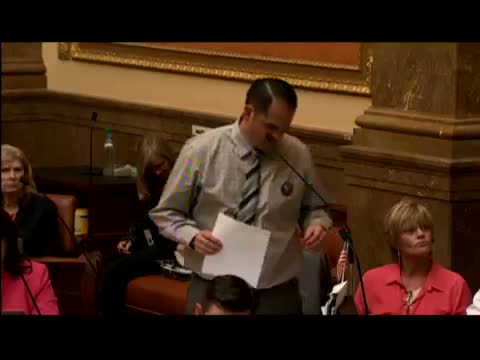
Sponsor Representative McKell described the bill as a local‑control and community‑resiliency measure to help counties leverage mineral‑lease revenue and Community Impact Board (CIB) financing for economic development and export access. "I see this more as a bill that deals with community resiliency and local control," McKell said, and he noted a potential $53,000,000 low‑interest loan discussed in CIB meetings to secure roughly 49 percent of a port stake at the Oakland Global Train and Logistics Center, a project estimated at about $250,000,000.
Supporters from resource counties framed the measure as a way to stabilize rural economies and retain jobs, especially in areas impacted by declines in coal and related industries. Representative Cunningham and Representative Owens spoke about local job losses and the need for new markets. Supporters emphasized safeguards in the bill: CIB review criteria, contingency that funds not be expended unless the investment "pencils," and loan terms and reporting requirements.
Opponents raised legal, fiscal and governance concerns and sought an amendment requiring an independent financial 'fairness opinion' before funds would be authorized. Representative Briscoe proposed Amendment #2 to require an independent review of marketability, financing risk and overall viability; the amendment failed on the floor. Detractors also cited editorials and warned about out-of-state investments and constitutional or procurement questions.
The House adopted the bill after debate and votes. Sponsors emphasized that local counties had voted on or supported proposals and that the funds originate from mineral‑lease revenues produced in the same counties, noting the CIB's established review process. The measure will be transmitted to the Senate as amended.