Get Full Government Meeting Transcripts, Videos, & Alerts Forever!
Get email alerts on the Infrastructure Water Fund topic
No spam. Unsubscribe anytime.
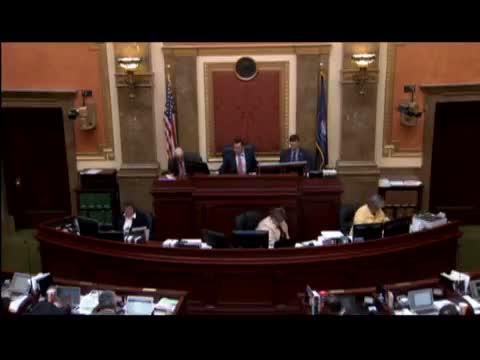
House approves SB 80 to redirect transportation earmarks into education and a new water fund after hours of debate
Summary
The Utah House passed second substitute SB 80 after extended debate over reallocating transportation earmarks to education and a new water revolving fund. Supporters said the move begins long‑term water savings; opponents warned about loss of oversight and risks to the Great Salt Lake and transportation projects.
The Utah House voted 48‑26 on March 9 to pass second substitute Senate Bill 80, a complex restructuring of transportation earmarks that shifts a portion of those funds into the general fund for education and into a newly reinforced water financing account.
Proponents, led on the floor by Representative Perry, said the substitute converts certain fixed earmarks into a percentage allocation, frees up money for the weighted pupil unit and creates a revolving loan fund to finance future water infrastructure. “We need to put money away,” Perry said in summation, arguing the change gives the state flexibility to address long‑term water needs and avoid “truck[ing] our water” in the future. Representative Sam Pape, who moved the substitution, described the proposal as a more nuanced allocation than the original, which concentrated funds into a single account.
Opponents pressed the House for specifics on how projects will be chosen and who will oversee the fund. Members on the floor, including Representative McKay and Representative Briscoe, warned the measure takes money out of a restricted transportation account and risks reintroducing earmark‑style political allocations without clear, enforceable criteria. Representative Sagers and others raised environmental and hydrological concerns, saying upstream diversions and past water use patterns have already reduced Great Salt Lake levels and that additional diversions deserve careful economic and ecological study.
Several members questioned whether the substitute limits the fund’s use for large projects such as Lake Powell pipeline or Bear River development; sponsor Representative Perry said the substitute contains no restriction language and that the companion measure (SB 251) would address oversight and structure. Representative Arent and Representative Handy urged caution but said they would support a funding mechanism paired with stronger oversight. Representative Brown and others urged placing money into boards or mechanisms that use objective criteria rather than ad hoc legislative release.
Supporters argued the bill funds education (via a transfer into the WPU) and begins building reserves for water projects the state will likely need as population grows. Critics said the bill lacks allocation criteria and could weaken transportation funding. After the previous question was called, Perry urged colleagues to vote as a “statesman” decision to prepare for future needs.
The motion to substitute the second substitute into SB 80 carried and the bill passed as amended, 48 yes to 26 no. The House returned the measure to the Senate for further consideration.