Get Full Government Meeting Transcripts, Videos, & Alerts Forever!
Get email alerts on the Energy Policy topic
No spam. Unsubscribe anytime.
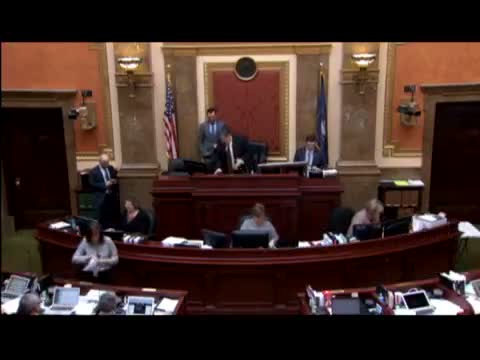
House rejects substitute energy bill after hours of debate on utility policy and coal funding
Summary
The Utah House defeated the fourth substitute of SB115, a broad utilities and energy bill that would have redirected certain utility funds toward new programs and a risk mitigation fund and changed oversight language for the Public Service Commission. The vote was 33–40 after floor amendments and lengthy debate.
The Utah House of Representatives rejected a substitute version of Senate Bill 115, the Sustainable Transportation and Energy Plan Act, after extended floor debate over how the state should balance utility policy, ratepayer protections and support for coal-plant transition. The final vote was 33 yes and 40 no, failing to pass the House.
Sponsor Representative Snow, who led the bill on the floor, said the measure would redirect a portion of Rocky Mountain Power customers’ rates into programs the Legislature would define — including incentives for electric-vehicle infrastructure, an energy balancing account and a risk‑mitigation fund for future generation transitions. "It's no secret here that we're talking about Rocky Mountain Power," Snow said, adding that the bill was crafted with dozens of stakeholders and includes a five‑year pilot and sunset provisions to protect consumers.
Opponents and skeptical members focused on changes that would shift the balance between ratepayers and shareholders and on language that alters mandatory duties into discretionary authority for the Public Service Commission (PSC). Representative Ahrendt and Representative Cox pushed amendments to restore PSC discretion and protect existing solar incentive programs; Representative Snow resisted broad changes that he said would upset a negotiated balance with industrial users. "There is nothing in this bill that gives Rocky Mountain Power the right to set rates for its customers. Only the Public Service Commission can do that," Snow said in defense of the bill.
Floor debate turned to the energy balancing account, long discussed in utility proceedings; Snow described the current 70/30 split (ratepayers bearing 70 percent of certain fuel costs) and said the bill keeps PSC scrutiny in place for any pass-through costs. Critics, including Representative Tanner and Representative Ivory, said the technical complexity and potential fiscal shift merited more PSC review and consumer‑facing analysis. "We have a body with the expertise to assess the effects of all those moving parts. That body is our Public Service Commission," Tanner said.
Members also debated the bill's impact on solar incentives and net metering. Representative Cox offered an amendment to prevent the early sunset of the Utah Solar Incentive Program; the amendment failed on the floor. Representative Snow argued the industry has grown to the point where continuing incentives at the same rate was not wise public policy.
After multiple floor amendments were offered and votes taken on housekeeping and policy changes, the House closed debate and rejected the substitute, returning the bill to Senate consideration.
The bill’s defeat leaves open the Legislature’s role in shaping long‑term energy policy, the PSC’s regulatory authority and how the state will support generation transitions. The sponsor said he will continue work with stakeholders and underscored the inclusion of reporting and sunset clauses intended to limit long-term risks.