Get Full Government Meeting Transcripts, Videos, & Alerts Forever!
Get email alerts on the Education topic
No spam. Unsubscribe anytime.
House approves SB 91 to broaden State Board of Education oversight, prompts local-control concerns
Summary
The Utah House passed second substitute SB 91 (64–4), expanding the State Board of Education’s tools to audit local education agencies receiving state funds, clarify rulemaking/delegation, require LEA contract provisions for third-party records, and allow hiring in-house counsel; some members warned the changes could intrude on local boards.
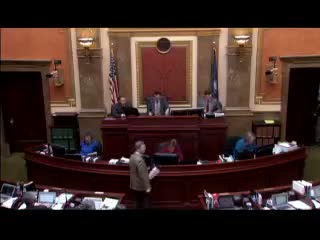
The Utah House of Representatives on March 8 passed second substitute SB 91, a bill that expands oversight tools for the State Board of Education, by a vote of 64 to 4. Representative Eliason, the House sponsor, said the measure was a top priority for the state board and framed the bill as a governance and accountability update.
Eliason told the House the bill does four main things: give the board authority to audit school districts and charter schools that receive state grants (the substitute removes authority to audit unrelated third parties), clarify the board’s rulemaking authority including permissive delegation to staff, require that local education agencies include contract provisions obliging third-party contractors to produce records needed to verify compliance with state law, and authorize the State Board to hire in‑house counsel while the Attorney General’s Office continues to handle litigation and risk-management matters. "Without the appropriate tools, there’s no way for the state board to monitor compliance," Eliason said during his presentation.
Representative Blifford asked whether in-house counsel could be used to sue state officials, including the governor or legislature. Eliason answered that the in-house counsel position would primarily handle compliance with federal mandates — he cited the Every Student Succeeds Act — and that, to his knowledge, the board would not use that counsel to litigate against the state because the board is a political subdivision and litigation remains with the Attorney General.
Representative Owens raised concerns about local control, asking whether local school boards had been consulted and arguing the measure could amount to "overkill" if used to withhold funds or levy penalties for late reporting. Eliason said the second substitute was drafted with input from superintendents and business administrators and that the revisions addressed many of the concerns raised.
The bill’s passage sends the amended measure back to the Senate for the president’s signature. Supporters said the bill strengthens the State Board’s ability to ensure state-mandated programs and funding are administered appropriately; opponents warned it could centralize authority and strain local governance.
The House record shows the vote as 64 yes to 4 no; individual roll-call votes were not read in the session transcript.