Get Full Government Meeting Transcripts, Videos, & Alerts Forever!
Get email alerts on the Public Safety topic
No spam. Unsubscribe anytime.
Utah House tightens drone rules near wildfires, rejects ‘intentional’ standard in favor of ‘recklessly’
Summary
First substitute HB126 passed the Utah House 66–7 on Feb. 22, 2016, creating restrictions and prioritized access for sanctioned operators during wildfire responses, and establishing penalties tied to reckless drone operation; an amendment to require intentional conduct failed on the floor.
The Utah House on Feb. 22 passed first-substitute House Bill 126 to restrict unmanned aircraft operations near wildfires and to create a preference system for sanctioned entities to receive clearance from an incident commander.
Representative Powell, the bill sponsor, said the measure responds to growing incidents where drones grounded firefighting aircraft and endangered operations. The substitute recognizes categories of "sanctioned entities"—including certain insurance adjusters, utilities and media—who may receive priority clearance from an incident commander if they coordinate and if the commander deems it safe.
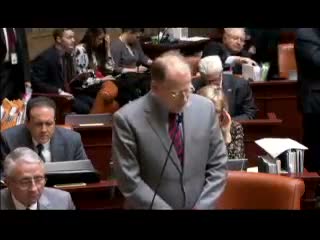
The bill also creates a severity scale for violations, with penalties ranging from a class B misdemeanor up to a second-degree felony when reckless operation causes collision or other severe consequences. Representative Tanner proposed an amendment to require the word "intentionally" rather than the sponsor's "recklessly," arguing felony penalties should require intentional conduct. Representative Powell and legislative research defended the recklessness standard as a sufficiently high burden for prosecution and better suited to capture conscious disregard of substantial risk.
The House voted down the intentional‑standard amendment and approved the bill as substituted 66–7. The sponsor said the measure balances public-safety protections for first responders with individual rights and gives incident commanders discretion to coordinate safe drone operations.