Get Full Government Meeting Transcripts, Videos, & Alerts Forever!
Get email alerts on the Constitutional Reform topic
No spam. Unsubscribe anytime.
House Debates Repealing 17th Amendment; Resolution Advances After Sharp Floor Debate
Summary
A joint resolution (SJR 2) calling on Congress to propose repealing the 17th Amendment drew extended debate on state vs. popular election of U.S. senators; supporters argued it would restore state voice, opponents warned of unintended consequences, and the House recorded 39 yea votes before returning the resolution to the Senate.
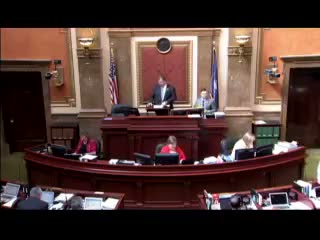
The House on March 2 entertained a lengthy and often contentious debate over Senate Joint Resolution 2, which calls on Congress to propose an amendment repealing the 17th Amendment (the constitutional change that made U.S. senators directly elected by the people).
Representative Ivory (presenting) framed the resolution as a restoration of the original constitutional balance between states and the federal government, saying repeal would strengthen states’ voices. Representative Christiansen offered support, while Representative Briscoe and others explained concerns about historical problems associated with indirect selection of senators, including deadlocks and proxy campaigns. Representative Brian King called the idea a ‘‘terrible idea’’ and urged the chamber to vote it down.
The debate touched on constitutional theory, historical practice, and concerns about voter representation. At one point the House went into call of the house to confirm votes; when the call was lifted, the clerk announced that Senate Joint Resolution 2 had received 39 yea votes and was returned to the Senate for the president’s signature.
Practical effect: SJR 2 is a legislative request to Congress to propose an amendment; it does not itself change federal law. The resolution’s passage in the House signals support from a segment of the state legislature but also revealed deep divisions among members about restoring the earlier method of senatorial selection.
Next step: SJR 2 was returned to the Senate for signature and any further action would require congressional consideration of a constitutional amendment.