Get Full Government Meeting Transcripts, Videos, & Alerts Forever!
Get email alerts on the Bigamy Statute topic
No spam. Unsubscribe anytime.
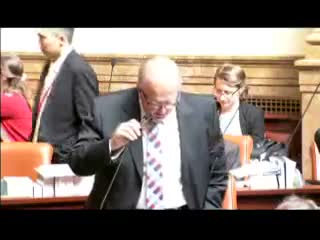
Utah House passes amendment to bigamy statute after hours of debate
Summary
The Utah House on March 1 passed House Bill 281, a narrowly framed change to the state's bigamy statute prompted by pending federal litigation. Lawmakers adopted a substitute amendment after extended floor debate over whether the offense should remain a felony.
The Utah House passed House Bill 281 on March 1, adopting a substitute amendment that narrows criminal liability under the state's bigamy law after several hours of floor debate. Representative Noel moved the bill back onto the floor, saying the change responds directly to a federal case challenging portions of the statute.
The bill's central change is a one-word clarification that requires prosecutors to prove both cohabitation and an assertion of marriage fraud, rather than only one or the other. Representative Noel described the amendment as a technical change prompted by litigation and said it would "narrow criminal liability as only applicable to those who both engage in multiple partner cohabitation and purport to be married to more than 1 person." He framed the change as restoring the statute to the form it had "been in effect since 1896."
Opponents and supporters framed the policy trade-offs differently during a lengthy debate. Representative Tanner urged caution at treating people as criminals and argued that removing felony status could encourage cooperation and reporting from inside polygamous communities. "If we make it so they don't have to begin the conversation by acknowledging that they are a felon, it's going to make it easier for us to have those conversations," Tanner said, urging reconsideration of felony penalties for the conduct at issue. Supporters of retaining a felony option, including Representative Noel and Representative Christiansen, argued the historic felony classification gives prosecutors necessary tools to address associated harms such as fraud, exploitation and other serious crimes.
Lawmakers considered competing floor amendments. A substitute amendment offered in Representative Stratton's name (amendment number 5) was adopted by division, 46 yea to 26 nay, clarifying how the statute would be applied in prosecutions while leaving room for prosecutorial charging discretion in appropriate cases. The House later recorded that the bill "passes this body as amended" and will be transmitted to the Senate; the transcript records 16 no votes, but a complete yes total was not specified in the floor record provided. The fiscal note for the measure recorded no direct cost ($0) in the files discussed on the floor.
The legislation was presented as a direct response to ongoing litigation (cited on the floor as the Cody Brown et al. case), with questions raised repeatedly about the effect of a statutory change on pending appeals and potential claims for attorney fees. Supporters argued the revision would moot parts of that appeal by clarifying statutory text; opponents warned about legislative changes enacted mid-litigation and urged careful review.
Next steps: the House transmitted the amended bill to the Senate for consideration.