Get Full Government Meeting Transcripts, Videos, & Alerts Forever!
Get email alerts on the Administrative Law topic
No spam. Unsubscribe anytime.
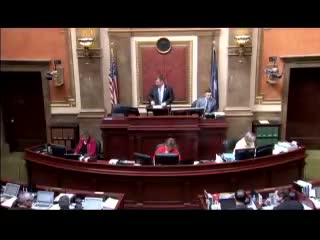
House Passes Bill to Alter Committee Rulemaking Authority After Supreme Court Decision
Summary
Senate Bill 126 requires concurrence by the Department of Health for rules proposed by certain health‑department advisory committees to ensure 'active supervision' after a U.S. Supreme Court ruling; members pressed on scope and childcare‑sector impacts before the House approved the bill 65–2.
The Utah House on March 2 passed Senate Bill 126, a measure designed to address legal exposure for regulatory committees after the U.S. Supreme Court’s decision in North Carolina State Board of Dental Examiners v. FTC.
Representative Eliason (presenting) said the bill implements the Business and Labor interim committee’s recommendations to add a requirement that certain Department of Health committees obtain concurrence from the department for proposed rules. If concurrence cannot be reached, the department would have final authority to adopt, amend or rescind rules. Eliason said the change is narrowly tailored to five committees listed in the bill and is intended to preserve protection from antitrust exposure for committee members.
Representative Anderson disclosed a conflict of interest (works in the childcare industry) and questioned whether the bill was too broad, asking whether it would apply to committee‑proposed rules generally or only to antitrust‑exposure issues. Eliason replied the measure applies to regulatory rules that require state antitrust immunity; the department would step in only when concurrence could not be reached. Multiple members sought clarification about which committees (lines 15–19 in the bill text) are covered; the sponsor said the bill does not change committee composition.
Supporters argued the bill protects individuals serving on committees from personal liability and preserves the ability to recruit industry expertise. Critics asked for narrower tailoring to avoid shifting regulatory authority unnecessarily to the department. Representative Eliason said the bill includes reporting requirements so the department will explain when it does not concur.
The House passed SB 126 as amended by a vote of 65 yea, 2 nay, and returned it to the Senate for concurrence.
Next steps: the measure will be returned to the Senate; implementation will involve Department of Health rule and reporting processes.