Get Full Government Meeting Transcripts, Videos, & Alerts Forever!
Get email alerts on the Employment Pregnancy Accommodations topic
No spam. Unsubscribe anytime.
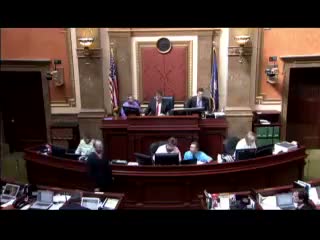
House passes bill requiring reasonable workplace accommodations for pregnancy-related conditions
Summary
The House passed a substituted version of Senate Bill 59 requiring employers with 15 or more employees to provide reasonable accommodations for limitations arising from pregnancy, childbirth or related conditions unless doing so would pose an undue hardship; the measure passed 59-15 after sponsor Q&A over scope and alignment with existing law.
The Utah House on Friday passed first substitute Senate Bill 59, a measure that requires employers with 15 or more employees to provide reasonable accommodations for limitations arising from pregnancy, childbirth or related conditions unless doing so would pose an undue hardship.
Representative Edwards, the House sponsor, said the bill "requires employers to simply provide reasonable accommodations for limitations arising out of pregnancy, childbirth, or related conditions unless doing so would pose an undue hardship on the employer." He told colleagues the measure is intended to ensure that "performance and not parenthood" is used in employment decisions and to align protections for pregnancy-related needs with other workplace accommodations.
In floor questioning, Representative Brian King asked whether the bill covers only public employers. Edwards replied, "I'm pretty sure that we're dealing with all employers in the state that have 15 or more employees," and said the bill models existing accommodation and anti‑discrimination frameworks in state and federal law. Edwards also told the House the bill is not changing last year's code compromise but uses the employee‑count threshold as a scope reference.
Supporters said the bill would help women who need temporary adjustments — such as additional bathroom breaks or a stool — to continue working safely and to avoid leaving the workforce. Edwards argued the policy is both good for families and the economy because accommodations improve recruitment and retention.
The House voted to approve the substituted bill 59‑15. The bill will be sent back to the Senate for further consideration in its substituted form.
Votes and next steps: The House passed first substitute SB 59 on the floor and transmitted the substituted bill; further action now depends on Senate consideration and any concurrence on changes.