Get Full Government Meeting Transcripts, Videos, & Alerts Forever!
Get email alerts on the Public Lands topic
No spam. Unsubscribe anytime.
House passes Utah Public Land Management Act after debate over trigger acreage and costs
Summary
First substitute HB 276, a framework for state management of transferred federal lands and creation of funds and divisions to manage them, passed the House 62–10 after debate over the acreage trigger that would activate the program and discussion of projected revenues and administrative costs.
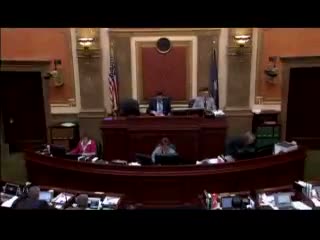
The House on Feb. 26 passed first substitute House Bill 276, the Utah Public Land Management Act, which lays out a structure for state management should large tracts of federal land be transferred to Utah.
Representative Michael Noel, sponsor, said the bill creates a management framework and funding mechanisms — including a public land protection fund, management fund, timber fund and grazing fund — and establishes a division in the Department of Natural Resources to administer transferred lands. "If we were going to take possession of 30,000,000 acres, 29,000,000 acres of public lands, that we should have some kind of a plan put forward of how we would manage those lands," Noel said.
Floor debate concentrated on the trigger that activates the bill's management structures. The current text used a trigger of 100,000 acres; Representative Briscoe proposed raising that to 1,000,000 acres, arguing the administrative cost and scale required a larger threshold. Representative Anderegg proposed an amendment lowering the number to 90,000. Sponsors argued 100,000 was appropriate to ensure the state is ready when transfers begin and to allow incremental activation by county. Fiscal-note figures were cited: Representative Briscoe referenced an estimate that revenues could fall between $102,000,000 and $127,000,000 in fiscal year 2018 if all referenced acreage were transferred; members also discussed administrative cost estimates but some transcript lines were unclear on the exact figures presented.
Representative Briscoe moved an amendment to raise the trigger to 1,000,000 acres; the motion failed. A substitute to lower the trigger to 90,000 likewise failed. The House voted to pass the first substitute, 62 yes to 10 no; the bill will be transmitted to the Senate for consideration.
What happens next: HB 276, as passed by the House, proceeds to the Senate. The bill creates new executive-branch structures and funds that would take effect once the trigger acreage threshold is met. Several members asked that the fiscal note and administrative-cost figures be clarified during further consideration.