Get Full Government Meeting Transcripts, Videos, & Alerts Forever!
Get email alerts on the Pensions topic
No spam. Unsubscribe anytime.
Utah House approves limits on post-retirement employment, citing public-safety shortages and pension impacts
Summary
The House passed first substitute HB 86 on Feb. 26, 2016, changing post-retirement employment rules so employers must pay system contribution and amortization rates for returning retirees; sponsor and supporters said it could help recruit public-safety and education workers, opponents warned of cost and bond-rating risks.
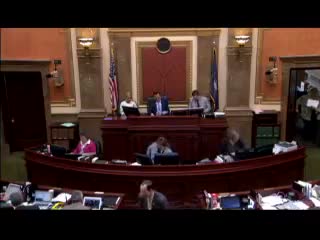
The Utah House of Representatives on Feb. 26 passed first substitute House Bill 86, changing post-retirement employment rules for public employees and sending the measure to the Senate.
Representative Cunningham, sponsor of HB 86, said the bill allows a retiree who returns to work at a different participating employer after 60 days to receive both salary and a monthly retirement allowance while the returning employer pays the contribution rate and the amortization rate that would have covered the employee had they remained continuously employed. "The employer, however, pays the contribution rate to the system that would have covered the retiree if the retiree would have remained employed," Cunningham said, arguing that the arrangement helps reduce incentives to ‘double-dip’ and can widen the pool of qualified workers for public safety and education.
Cunningham said the bill includes a five-year sunset to gather data on whether the change affects the system's unfunded liability. He cited historical funded-ratio figures, noting the system was about 95 percent funded before the 2008 market downturn and dropped to as low as 77 percent before recovering. Opponents warned of potential added liabilities and budget pressures. Representative Brad King urged the body to "roll this back" to restore prior policy for teachers and public-safety employees, saying promises made when earlier changes were adopted had not been kept.
Lawmakers debated how the change would affect vacancies, recruitment and employer costs; Representative Ipsen asked whether returning retirees merely shuffle positions without increasing total jobs, and Representative DeCarro pressed on whether changes could affect the state's AAA bond rating. Cunningham replied that current unfunded-liability estimates are lower than prior peaks and he did not think a single bill would by itself tip ratings, but added the caveat that sustained investment underperformance or additional retirement changes could affect ratings.
After debate, the House recorded 45 yes votes and 28 no votes; the bill passed and was transmitted to the Senate for consideration.
What happens next: HB 86 will be considered by the Utah Senate. The bill as passed includes a five-year sunset to allow the legislature to evaluate impacts on hiring and the retirement fund.