Get Full Government Meeting Transcripts, Videos, & Alerts Forever!
Get email alerts on the State Budget topic
No spam. Unsubscribe anytime.
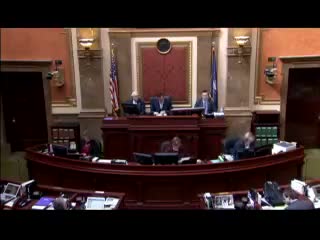
Utah House approves multiple Senate base-budget bills, including $1.6 billion higher-education package
Summary
On Feb. 8, 2016 the Utah House passed several Senate base-budget bills on third reading, including SB 1 (a $1.6 billion higher-education base budget) and companion bills addressing labor, retirement, infrastructure and veterans programs; votes were unanimous or nearly so on each measure.
The Utah House on Feb. 8 approved a set of Senate base-budget bills on third reading, including SB 1, a higher-education base budget that the House sponsor said appropriates $1.6 billion to Utah’s eight public colleges and universities. The bills were moved through the calendar under a procedural motion to lift them from the Rules Committee for immediate consideration.
Representative Grover, the House sponsor for SB 1, told members the $1.6 billion package is funded from three sources: “the general fund, which is $390,000,000, the education fund, 524,000,000, and then an additional 725,000,000 from dedicated credits,” the sponsor said. He described dedicated credits as primarily tuition and said institutions have been asked to find efficiencies and reduce internal spending.
Why it matters: SB 1 sets base operating support for public higher-education institutions and reflects a mix of general fund, education fund and dedicated tuition revenues. Members pressed the sponsor on the mix of funds; Representative Cox noted an approximately $39 million shift toward the general fund compared with prior figures.
Other budget bills considered the same day included first substitute SB 4 (business, economic development and labor base budget), first substitute SB 5 (retirement and independent entities base budget), first substitute SB 6 (infrastructure and general government base budget) and SB 7 (National Guard, veterans affairs and legislature base budget). Sponsors summarized line-item changes, lapses and transfers and noted minor realignments and savings.
Representative Pitcher summarized SB 4’s adjustments, including lapses of $4,500,000 in tax commission non-lapsing balances and a transfer of $400,000 to a GOED line item to support the Saint George welcome center. The House un-circled the bill and passed the first substitute with a recorded vote of 69 yes, 1 no.
Representative Powell presented first substitute SB 5 and described a set of reallocations that produced a net general fund savings of $1,500,000; the bill passed the House 66–0. First substitute SB 6, which sponsors described as appropriating nearly $1.7 billion and including $220,000,523 from a general education fund figure cited by the sponsor, passed 73–0. SB 7 passed 73–0; the sponsor said the bill appropriates $119,600,000 with $38,300,000 from the general fund and $79,300,000 from federal funds.
Votes at a glance: - SB 1 (Higher education base budget): Passed, 72–0. - First substitute SB 4 (Business/economic development & labor): Passed, 69–1. - First substitute SB 5 (Retirement & independent entities): Passed, 66–0. - First substitute SB 6 (Infrastructure & general government): Passed, 73–0. - SB 7 (National Guard, Veterans Affairs & Legislature): Passed, 73–0.
Next steps: Passed bills were signed by the Speaker and returned to the Senate for the President’s signature or sent to staff for enrolling. Committee reports were adopted and multiple House bills were placed on the third-reading calendar or consent calendar for future floor consideration.