Get Full Government Meeting Transcripts, Videos, & Alerts Forever!
Get email alerts on the Legislation Roundup topic
No spam. Unsubscribe anytime.
House sends dozens of bills to the Senate, including municipal disconnection, DUI enforcement funding and volunteer care credit
Summary
The Utah House passed a slate of bills largely on unanimous votes, sending measures on municipal disconnection, solid waste definitions, charitable solicitation exemptions, health‑care sharing ministry exemptions, volunteer health‑care continuing education credit and a $50 DUI impound fee increase to the Senate.
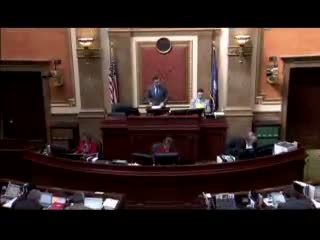
The Utah House of Representatives on Feb. 16, 2016 passed a series of bills on the consent and third‑reading calendars and transmitted them to the Senate. Many measures passed unanimously or by wide margins and covered municipal governance, waste definitions, nonprofit and charitable exemptions, health policy, and public safety funding.
Key results at a glance
• HB 248, Municipal Disconnection Amendments — Sponsor Representative Brown said the bill allows a mayor to file a petition for disconnection of lands (for example, vacant tribal‑owned properties within municipal boundaries) and sets a process involving city council review and possible district court appeal; passed 71‑0 and will be transmitted to the Senate.
• HB 258 (first substitute), Solid Waste Amendments — Representative Oda said the bill clarifies the difference between solid waste and recyclable commodities to avoid regulatory overreach at recycling facilities; passed 69‑0 and is sent to the Senate.
• HCR 7, Concurrent Resolution to place a statue of Fathers Dominguez and Escalante at the state capitol — Representative Wheatley said the privately funded project recognizes historical contributions and will be placed at the capitol; passed 68‑0 and will be transmitted to the Senate.
• HB 267, Charitable Solicitation Act Amendments — Representative Behrendt described clarifications to exemptions for public schools, institutions of higher education, and parent/teacher organizations and added an exemption for small state grants under $1,500; passed 63‑0 and will be transmitted to the Senate.
• SB 40, Utah Revised Nonprofit Corporation Act Amendments — Representative Frower summarized a bill allowing nonprofit boards, unless their bylaws say otherwise, to take action without a formal meeting; passed 63‑0 and returned to the Senate.
• SB 55, Financial Institutions Amendments — Representative Val Peterson said the bill defines 'technology service provider' to regulate third‑party providers working with financial institutions and permit report releases to those providers; passed 63‑0 and will be returned to the Senate.
• HB 113, Health Care Sharing Ministry Amendments — Representative Kennedy described exemptions and required disclosures for health‑sharing ministries and stated these arrangements can meet Affordable Care Act requirements; the bill passed 69‑3 and will be transmitted to the Senate.
• HB 186 (second substitute), Volunteer Health Care Continuing Education Credit — Sponsors described a program allowing a portion of continuing education requirements (negotiated cap of 15% noted) to be met through volunteer clinical hours to encourage free care and address indemnification and liability concerns; passed 72‑0 and is sent to the Senate.
• HB 120 (first substitute), DUI Enforcement Funding Amendments — Representative Eliason said the bill raises the vehicle impound fee by $50 for DUI impounds, directing revenue to a restricted account to fund additional DUI overtime shifts (estimated to fund about 2,000 additional shifts annually); passed 71‑0 and will be transmitted to the Senate.
Sponsors and members briefly described voter‑process bills, committee assignments and additional House actions; committee reports were adopted and multiple bills were placed on the third‑reading calendar. The House adjourned until Wednesday, Feb. 17 at 10:00 a.m.
Votes recorded on the floor were the official outcomes and the bills listed above will proceed to the Senate for the next stage of consideration.