Get Full Government Meeting Transcripts, Videos, & Alerts Forever!
Get email alerts on the Water Pricing topic
No spam. Unsubscribe anytime.
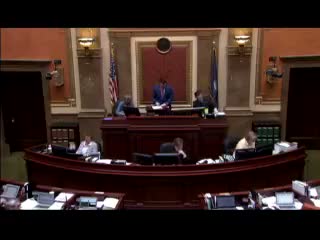
Utah House approves bill requiring water providers to adopt tiered pricing processes
Summary
The Utah House passed Senate Bill 28, a 'process' bill requiring culinary water providers to implement tiered pricing structures intended to promote conservation; supporters said it follows audit recommendations, while critics warned it could leave consumers exposed to rate increases without statutory caps.
The Utah House on Thursday approved Senate Bill 28, a measure that would require culinary water providers to adopt a tiered pricing framework as a tool to encourage conservation.
Sponsor Representative Lee Perry described the measure as a procedural response to an audit of Utah’s water needs. "This is a process bill," Perry said, adding the bill "is not gonna raise water rates" and that it leaves the choice of rate amounts to local providers and customers.
Supporters cited the audit and conservation aims. Representative McKay, a backer in debate, said tiered pricing helps align consumer incentives with conservation and called the change "long overdue." Representative Briscoe said the bill would let providers send a price signal so "the more you use, the more you pay." The sponsor noted the bill does not set specific dollar amounts: "We don't set the dollar ... No. We don't mandate 1¢. We don't mandate a hundred dollars." (Representative Perry)
Opponents and questioners pressed on consumer protections and local impacts. Representative Fred Cox urged practical conservation steps and cautioned about costs to taxpayers; Representative Hutchings warned of unintended consequences for households that already conserve, saying, "every time I conserve, I'm paying more." Representative Webb and others asked whether the bill could be used to justify large rate increases without a legal maximum; the sponsor responded that the bill establishes a required process but leaves price challenges to local oversight and legal avenues.
Supporters framed the bill as a policy statement and administrative step that lets communities plan and implement tiered pricing rather than an immediate rate increase. Representative Ward said it could be viewed as a discount for low-volume users because it ensures lower blocks remain less costly.
After debate, sponsors waived summation and the House closed debate. The bill passed on final passage with a recorded tally of 64 yes, 9 no and will be returned to the Senate for further consideration.
The measure grew out of interim committee work and a legislative audit urging examination of water-pricing policy; the bill requires providers to have an appropriate tiered structure but does not specify rates or caps, leaving those to local rate-setting processes and oversight.
Next steps: SB 28 returns to the Senate for the concurrence or further action promised by the House.