Get Full Government Meeting Transcripts, Videos, & Alerts Forever!
Get email alerts on the Property Tax topic
No spam. Unsubscribe anytime.
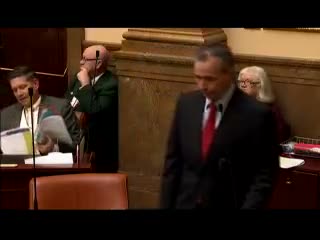
House passes major property-tax overhaul after hours of debate
Summary
The House approved Third Substitute HB 25, reorganizing how growth and property revenue are categorized into three 'buckets' to address stacking in certified rates; sponsors said the changes preserve consensus and remove a disputed greenbelt provision. The bill passed 70-1 and will go to the Senate.
The Utah House of Representatives approved a package of property-tax changes Tuesday, passing Third Substitute House Bill 25 after extended debate about revenue allocation and school-levy rules.
Representative Dan McKay, the bill—s sponsor, said the substitute "fixes a lot of issues that we have with the certified rate" by creating three separate revenue categories: centrally assessed revenue, project-area growth revenue and locally assessed real property. He told colleagues the change addresses a "stacking problem" that has made it difficult for local governments to plan when large mixed-use projects or changes in personal-property assessments produce uneven year-to-year results.
"Third substitute House Bill 25 fixes a lot of issues that we have with the certified rate," McKay said during his presentation. He said the substitute also removed greenbelt provisions that had become a sticking point in negotiations to preserve the bill's consensus.
Supporters said the measure was the result of lengthy committee work and compromises. Representative Standard, a member of the House Revenue and Taxation Committee, urged colleagues to preserve the bill's negotiated form rather than accept late-filed changes that had repeatedly failed in committee in prior years.
Lawmakers debated a motion to substitute a fourth version that would have altered tax-cap treatment for 11 school districts; that motion was withdrawn and the sponsor opposed adding provisions he called a potential "poison pill." Representative Powell and others explained the bill's technical formulas and the goal of making certified-rate calculations fairer across districts.
After proponents answered members' technical questions and after several motions were filed and withdrawn, the House voted to approve Third Substitute HB 25 by a recorded vote of 70 yes to 1 no. The bill will move to the Senate for consideration.
The bill—s passage follows weeks of drafting and negotiation, sponsors said, and aims to reduce volatility in local revenue projections. McKay thanked members for engagement and said the work had been the product of sustained attention from both chambers and local stakeholders.
The House recorded final passage on the House floor; the bill will be transmitted to the Senate for further action.