Get Full Government Meeting Transcripts, Videos, & Alerts Forever!
Get email alerts on the Medical Liability topic
No spam. Unsubscribe anytime.
Utah House narrows path for lawsuits by non-patients, approves bill defining duty for health-care providers
Summary
The Utah House approved first substitute HB 79 to define when health-care providers can be sued by non-patients injured by a patient’s actions, setting a jury standard that requires proof the provider’s conduct showed a 'knowing and reckless indifference' to the non-patient’s injury; the measure passed after extended debate, 66–5.
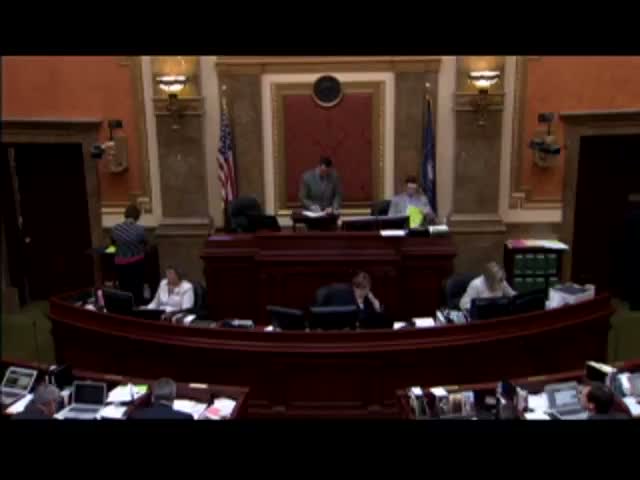
SALT LAKE CITY — The Utah House on Monday approved first substitute HB 79, a bill that codifies when a health-care provider’s duty to a patient can extend to people harmed by that patient’s conduct.
Sponsor Representative McKiff, the bill’s author, told the House the measure is designed to give juries guidance about the line between ordinary medical malpractice and extraordinary conduct that can make a provider liable to third parties. “The health care provider’s act or omission was conduct that manifest[ed] a knowing and reckless indifference toward and a disregard of the injury suffered by the non-patient plaintiff,” McKiff read from the bill’s crucial language and said that those two lines will be the basis of a jury instruction.
Supporters described the bill as a negotiated compromise reached after extended talks between the Utah Medical Association and the Utah Association for Justice. Representative Brian King praised the negotiation but said he remained concerned the statutory standard — requiring proof of “knowing and reckless indifference” — sets too high a burden for plaintiffs and may foreclose meritorious cases.
Other members probed the scope of the measure. Representative Hemingway asked whether a non-patient could recover for loss of consortium; McKiff said such recoveries are possible in tightly defined circumstances. Representative Anderegg compared the bill to dram-shop liability and was told the bill includes a knowledge element distinguishing it from ordinary venue-based liability. Representative Kennedy, speaking in strong support, said the statute attempts to refine a Supreme Court decision and to draw a line between ordinary unforeseeable adverse events and truly reckless prescribing.
McKiff used factual examples in debate to explain application: a physician who knows a patient will drive a school bus shortly after a sedating prescription and prescribes anyway, he said, illustrates the kind of foreseeable risk the bill targets. Several members emphasized the bill’s careful drafting and that juries ultimately would evaluate whether the statutory standard was met.
After extended questioning and floor discussion, the House approved the bill 66–5. The bill will be transmitted to the Senate for consideration.
Votes and next steps: First substitute House Bill 79 passed the House, 66 yes, 5 no. No amendments were recorded on the floor prior to final passage.
Sources: Floor discussion and sponsor remarks as recorded on the House third-reading calendar.