Get Full Government Meeting Transcripts, Videos, & Alerts Forever!
Get email alerts on the Education Kindergarten topic
No spam. Unsubscribe anytime.
Utah House approves bill letting districts offer optional extended‑day kindergarten with fees
Summary
The House approved HB 41 to let local school districts offer optional extended‑day kindergarten and charge fees while tying eligibility to existing fee‑waiver rules; supporters cited literacy gains from OEK programs, opponents warned it could compete with private providers and trigger local fee‑waiver costs. (Vote: 47–27)
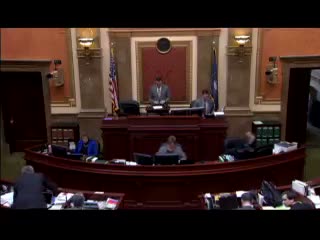
Representative Eliason, the bill sponsor, told the House that HB 41 would allow local school boards to offer optional extended‑day kindergarten and charge fees while preserving free basic kindergarten and existing fee‑waiver protections. “This is optional for districts, it's optional for schools, it's optional for parents, and it's optional for students,” Eliason said during his presentation.
The bill removes a statutory prohibition so districts and charter schools can expand existing optional extended‑day kindergarten (OEK) programs to more schools. Eliason said the measure carries no state fiscal note and would not require a state appropriation; any program would have to be financially self‑sustaining at the local level or covered by local district funds and fee revenue.
Why it matters: Supporters said the structured OEK model improves early literacy for struggling students and argued local control lets districts expand programs where private providers are unavailable. Opponents said letting districts charge fees risks undermining the constitutional guarantee of a free basic elementary education and could amount to taxpayer‑funded competition with private early‑childhood providers.
Key debate and concerns: Representative Fred Cox questioned whether creating a fee for supplemental kindergarten hours skirts Article X of the Utah Constitution guaranteeing free public elementary education. Eliason replied the bill preserves the half‑day basic program and does not require any child to pay to attend the minimum program. Representative Anderson, who disclosed ownership in an early‑childhood business, said the bill “is one more opportunity” for public schools to compete with private providers and urged caution. Representative Anderegg and others pressed about how teachers would be compensated and how fee‑waiver eligibility would be verified; Eliason pointed to existing fee‑waiver statute (section 53a‑12‑103) as the mechanism for waivers.
Fee waivers and local costs: Several members asked how many students might trigger fee waivers and who would cover waiver costs. Eliason and other supporters said the bill does not appropriate state funds and that districts would only offer the program if they could make it financially viable; members warned that local districts would bear the cost of any fee waivers because the state appropriation is not funding the program.
Vote and next steps: After debate the House invoked the previous question to end debate and voted to pass HB 41. The bill passed the House 47–27 and will be transmitted to the Senate for consideration.
The bill’s passage leaves open implementation questions at the local level, including how districts will set prices, apply fee waivers for eligible students and adjust teacher schedules or compensation under local contracts.